

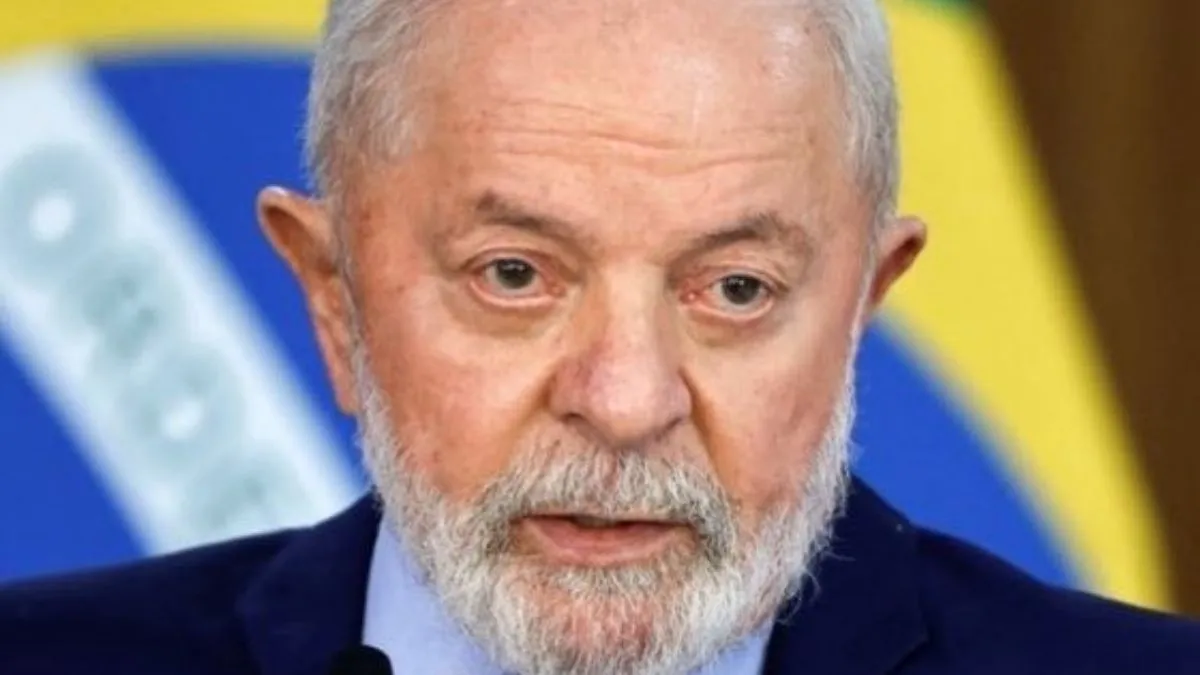
Brazilian President Luiz Inácio Lula da Silva secured an unprecedented fourth presidential term on October 25, 2026, defeating conservative challenger Flávio Bolsonaro in a high-stakes runoff election. Certified by the Superior Electoral Court (TSE), the final tally confirmed Lula’s victory with 51.79% of the valid votes (over 64.2 million ballots) against Bolsonaro’s 48.21% (approximately 59.8 million ballots).
The triumph reinforces Lula’s status as the defining figure in modern Brazilian democracy, extending an extraordinary trajectory that spans more than five decades from union organizing to the Planalto Palace.
The 2026 Runoff Results
The 2026 election concluded a fiercely contested campaign between the Workers’ Party (Partido dos Trabalhadores, PT) and the Liberal Party (PL). With official certification from the Superior Electoral Court, Lula’s fourth administration is set to officially commence on January 5, 2027.
| Candidate | Political Party | Valid Votes | Vote Share |
| Luiz Inácio Lula da Silva | Workers’ Party (PT) | ~64.2 Million | 51.79% |
| Flávio Bolsonaro | Liberal Party (PL) | ~59.8 Million | 48.21% |
Profile and Early Life
Luiz Inácio da Silva was born on October 27, 1945, in the semi-arid interior of Garanhuns, Pernambuco. Facing severe economic hardship, his family migrated to the coastal state of São Paulo during his childhood, settling first in Santos and later in the industrial belt of São Paulo city.
Leaving formal schooling early to contribute to the family income, Lula worked street jobs before securing an apprenticeship in a metallurgy plant at age 14. He completed formal vocational training as a lathe operator through the National Service for Industrial Apprenticeship (SENAI), a trade that directly shaped his political identity and worldview.
| Detail | Information |
| Full Name | Luiz Inácio Lula da Silva |
| Date of Birth | October 27, 1945 |
| Place of Birth | Garanhuns, Pernambuco, Brazil |
| Early Profession | Metalworker and Lathe Operator |
| Union Leadership | President, ABC Metalworkers’ Union (1975) |
| Political Party | Workers’ Party (PT), co-founded in 1980 |
| Presidential Terms | 2003–2006, 2007–2010, 2023–2026, 2027–present |
Rise of the Trade Unionist and Founding of the PT
During the late 1960s and 1970s, Brazil remained under military rule. Working inside the heavy automotive and metallurgical factories of the ABC Region outside São Paulo, Lula became active in the union movement.
In 1975, he was elected president of the Metalworkers’ Union of São Bernardo do Campo and Diadema. Between 1978 and 1980, he led a wave of historic strikes involving hundreds of thousands of industrial workers. These labor mobilizations defied military suppression and played a key role in accelerating Brazil’s transition toward civilian rule.
In February 1980, Lula joined academics, union leaders, and grassroots activists to establish the Workers’ Party (PT). Four years later, he was a prominent voice in the Diretas Já movement, which campaigned for direct popular elections.
Early Presidential Campaigns and the 2002 Breakthrough
Lula first ran for president in 1989 in Brazil’s first direct popular election in three decades, narrowly losing the second round to Fernando Collor de Mello. He contested two subsequent presidential races in 1994 and 1998, losing both to Fernando Henrique Cardoso.
Recognizing the need to broaden his political coalition, Lula recalibrated the party’s messaging in 2002, issuing the famous “Letter to the Brazilian People” to reassure domestic and international markets of fiscal pragmatism. The strategy yielded a landslide win in 2002, followed by re-election in 2006.
Transformative Social Policies and Economic Expansion
Lula’s initial two terms (2003–2010) coincided with strong global commodity demand, enabling substantial investments in state-led social infrastructure without destabilizing the macroeconomic framework.
- Bolsa Família (Family Allowance): A conditional cash-transfer initiative providing targeted monthly stipends to low-income families linked to children’s school attendance and vaccination schedules.
- Minha Casa, Minha Vida (My House, My Life): A large-scale public-private housing project aimed at bridging the national housing deficit for lower-income tiers.
- Luz para Todos (Light for All): An infrastructure initiative expanding electrical grid connectivity to remote rural communities and traditional riverine populations.
- PROUNI (University for All): A system granting tuition exemptions and partial scholarships for low-income and marginalized students to attend private colleges.
- Farmácia Popular (Popular Pharmacy): A public distribution network providing essential medicines at low or no cost to treat chronic illnesses.
These welfare initiatives helped elevate tens of millions out of extreme poverty and fostered an expanding middle class across urban peripheries and the neglected Northeast.
Imprisonment, Legal Rehabilitation, and the 2022 Return
After stepping down in 2010 with approval ratings topping 80%, Lula’s political legacy faced intense turbulence. In the late 2010s, federal investigations under Operation Lava Jato led to corruption convictions against him. In April 2018, Lula surrendered to authorities and served 580 days in a federal facility in Curitiba, preventing him from participating in the 2018 presidential campaign.
In March 2021, Brazil’s Federal Supreme Court (STF) annulled his convictions, determining that the presiding tribunal lacked proper jurisdiction and had acted with procedural bias. With his political rights restored, Lula organized a broad pro-democracy coalition for the 2022 election, narrowly unseating incumbent Jair Bolsonaro and re-entering the presidency in January 2023.
Significance of a Fourth Presidential Term
Winning an unprecedented fourth term solidifies Lula da Silva’s historic tenure in Latin America. The 2026 victory against Flávio Bolsonaro reflects both the durable loyalty of working-class and northeastern voter blocs and the persistent polarization of Brazilian society.
From a lathe operator in São Paulo’s industrial belt to entering a fourth presidential mandate in his eighties, Lula’s career continues to serve as an enduring study of political resilience, grassroots mobilization, and institutional endurance in the Global South.