

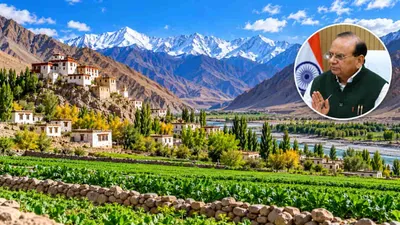
In a milestone for sustainable agriculture and high-altitude ecological conservation, Ladakh has taken center stage as India’s first 100% Organic Union Territory. Following a systematic transition that combined strict legislative restrictions on agrochemicals with widespread organic certification, the Trans-Himalayan region has established a template for ecological farming in cold-desert landscapes.
The formal announcement comes after months of policy enforcement aimed at eliminating synthetic inputs, reviving traditional soil-enrichment methods, and safeguarding the ecologically sensitive upper Indus and Zanskar river basins.
Key Facts: Ladakh’s Organic Transition
| Parameter | Details |
|---|---|
| Region | Union Territory of Ladakh (Leh & Kargil districts) |
| Formal Milestone | Declared India’s first 100% Organic Union Territory |
| Official Declaration | October 25, 2026 |
| Key Regulatory Action | Complete ban on procurement, distribution, sale, and use of chemical and synthetic fertilisers |
| Fertiliser Ban Notified | July 18, 2026 |
| Nodal Implementing Bodies | Agriculture Department, UT Ladakh, supported by Horticulture, Cooperatives, and Panchayati Raj |
| Institutional Alliance | Collaboration under Mission Organic Development Initiative (MODI) with Sikkim State Organic Certification Agency (SSOCA) |
| Major Specialty Crops | Halman/Raktsey Karpo Apricots, Sea Buckthorn (Leh Berry), Grim (Highland Barley), Buckwheat, and Cold-Hardy Vegetables |
| Regulatory Enforcement | Fines starting at ₹10,000 for illegal trade or use of synthetic agrochemicals |
The Ban on Chemical Fertilisers: Policy and Enforcement
The foundation of Ladakh’s complete organic status rests on a firm regulatory ban issued in mid-2026.
- Complete Prohibition: The directive outlaws the import, transport, marketing, storage, and on-field application of urea, diammonium phosphate (DAP), synthetic nitrogen-phosphorus-potassium (NPK) blends, and chemical pesticides across both Leh and Kargil districts.
- Alternative Supply Chains: Ahead of seasonal sowing cycles, the administration established organic manure supply chains, distributing vetted bio-fertiliser consignments to rural administrative clusters.
- Village-Level Certifications: More than 200 villages across belts such as Sham, Zanskar, Dras, and Nubra were systematically certified under National Programme for Organic Production (NPOP) and Participatory Guarantee System (PGS) protocols to secure trace-to-source integrity.
- Strict Monitoring: Field verification teams under local administrative sub-divisions conduct periodic checks, enforcing penalties of ₹10,000 or higher on non-compliant dealers or bulk users.
Environmental and Ecological Significance
Ladakh’s high-altitude cold desert environment is characterized by thin topsoil, hyper-arid conditions, low biomass turnover, and glacial meltwater dependence. Chemical interventions posed disproportionate risks to this fragile setting:
- Preserving Glacial Runoff and Groundwater: Glacial melt is channeled through traditional stone and mud canals (yuras) to nourish terraced fields. Chemical residues do not easily break down in freezing conditions, creating risks of groundwater contamination and riverine toxicity. A 100% organic model keeps runoff pristine.
- Restoring Soil Microbiology: High-altitude soils have delicate microbial balances. Synthetic inputs exhaust soil carbon rapidly in arid zones. Organic amendments like decomposed sheep and yak manure, compost, and bio-inoculants replenish essential organic carbon and enhance moisture retention.
- Protection of Trans-Himalayan Biodiversity: Banning systemic pesticides protects native pollinators, alpine bird species, and soil fauna that are vital for sustaining cold-desert flora.
Economic Benefits for Local Farmers
Transitioning from subsistence farming to high-value certified organic production directly alters the economic horizon of rural Ladakhi households:
- Premium Niche Market Positioning: Cold-climate produce from Ladakh already possesses unique organoleptic profiles due to intense solar radiation and clean mountain air. Organic certification allows crops like Raktsey Karpo apricots and cold-pressed sea buckthorn oils to capture national and export price premiums.
- Lowered Input Dependency: Ladakh’s extreme winters frequently cut off land transport routes via Zojila and Atal Tunnels. Relying on imported synthetic fertilizers meant high procurement costs and vulnerability to transport delays. Producing compost and utilizing livestock manure creates self-reliant, circular agricultural inputs.
- Geographical Indication (GI) Integration: Ladakh’s indigenous crops—such as Ladakh Seabuckthorn and Raktsey Karpo Apricot—gain amplified market leverage when backed by verifiable chemical-free production credentials.
- Ecotourism and Farm Tourism Synergies: The union of organic farming with eco-friendly homestays creates parallel revenue streams for rural villages, drawing tourists interested in sustainable living and heritage gastronomy.
Road Ahead: Institutional Challenges and Next Steps
Sustaining a fully organic territory requires ongoing institutional coordination:
- Streamlining Farm-to-Certification Logistics: Navigating complex NPOP audit regimes requires hands-on assistance for smallholders with fragmented land parcels. The continued partnership with certification bodies ensures paperwork barriers do not hinder local growers.
- Cold Storage and Value Addition: Because the Ladakhi agricultural season is compressed into a single annual window (May to September), cold chain facilities, solar dehydrators, and primary processing units are essential to store produce without spoilage.
- Inter-Departmental Convergence: The Agriculture and Horticulture departments, alongside Cooperatives and Rural Development agencies, are focused on expanding farmers’ training, stabilizing organic compost pricing, and preventing black-market chemical leakages along border transit points.
Ladakh’s structural transition to a completely organic territory follows Sikkim’s precedent from 2016, serving as an operational model for mountainous regions striving to harmonize economic development with sensitive ecosystem preservation.