August 22 is the 234th day of the year in the Gregorian calendar, or the 235th day in a leap year. After this date, 131 days remain until the year comes to an end.
More than simply a date on the calendar, August 22 is connected with a remarkable range of historical events, important discoveries, notable births and deaths, national and international observances, and cultural milestones. Across different periods of history, events occurring on this day have influenced politics, science, exploration, society, arts, sports, and popular culture.
For students, researchers, history enthusiasts, and general readers, August 22 provides an interesting opportunity to explore how events from different centuries can become connected through a single calendar date. From major turning points in world history to the lives of influential personalities, the day offers many stories worth remembering.
This article explores August 22 in history, including its major events, famous birthdays, notable deaths, holidays and observances, interesting facts, and other significant moments associated with the date.
Events
August 22 has witnessed major turning points in politics, warfare, exploration, human rights, science, aviation, sports, and international relations. From the rise and fall of rulers in medieval Europe to the signing of the First Geneva Convention and major events of the modern era, the date provides a fascinating cross-section of world history.
Pre-1600
392 – Eugenius becomes Western Roman Emperor
On August 22, 392, Eugenius was proclaimed Western Roman Emperor with the backing of the powerful Frankish general Arbogast. Eugenius had previously worked as a teacher of rhetoric and an imperial official. His elevation came during a period of political instability following the death of Emperor Valentinian II. Although Eugenius was nominally Christian, his regime became associated with attempts by elements of Rome’s traditional pagan aristocracy to regain influence. His rule ended in 394 when the forces of Theodosius I defeated Eugenius and Arbogast at the Battle of the Frigidus.
851 – Battle of Jengland
The Battle of Jengland was fought between the Bretons under Erispoe and the West Frankish forces of Charles the Bald. The battle resulted in a significant Breton victory and checked attempts by West Francia to extend its control over Brittany. The subsequent political settlement strengthened Erispoe’s authority and helped consolidate medieval Brittany as a distinct political power.
1138 – Battle of the Standard
On August 22, 1138, English and Scottish forces fought the Battle of the Standard near Northallerton in Yorkshire. King David I of Scotland had invaded northern England while supporting the claim of Empress Matilda during the period of civil conflict known as the Anarchy. The English army took its name from a religious standard mounted on a wagon and carrying sacred banners. The Scottish army was defeated, although David continued to exercise considerable influence in northern England afterward.
1153 – Ascalon falls to the Crusaders
After a prolonged siege, the strategically important fortress of Ascalon was surrendered to forces of the Kingdom of Jerusalem. King Baldwin III of Jerusalem led the campaign, supported by Crusader forces, the Knights Templar and the Knights Hospitaller.
Ascalon had been an important Fatimid stronghold on the Mediterranean coast and a major strategic threat to the Crusader kingdom. Its capture significantly strengthened the Kingdom of Jerusalem’s southern frontier and reduced Fatimid Egypt’s military presence in the region.
1485 – Battle of Bosworth Field transforms English history
One of the most consequential events associated with August 22 occurred in 1485, when the Battle of Bosworth Field was fought during the Wars of the Roses.
King Richard III faced the forces of Henry Tudor, later Henry VII. Richard was killed during the fighting, becoming the last English king to die in battle.
Henry’s victory effectively ended the rule of the Plantagenet kings and established the Tudor dynasty. Henry VII’s reign helped restore political stability after decades of dynastic conflict. His descendants would include Henry VIII, Edward VI, Mary I and Elizabeth I.
For this reason, Bosworth is commonly regarded as one of the defining battles of English history.
1559 – Archbishop Bartolomé Carranza arrested
Spanish archbishop and theologian Bartolomé Carranza, Archbishop of Toledo, was arrested by the Spanish Inquisition on suspicion of heresy. The case became one of the most famous theological controversies of 16th-century Spain. Carranza spent many years imprisoned while authorities examined his writings and religious beliefs.
1601–1900
1614 – Jews expelled from Frankfurt during the Fettmilch uprising
During the Fettmilch uprising, rioters attacked and plundered Frankfurt’s Jewish quarter, the Judengasse. Jewish residents were subsequently driven from the city.
The revolt combined economic grievances, political tensions and antisemitism. Imperial authorities eventually suppressed the rebellion, and the Jewish community was later permitted to return. The episode remains an important chapter in the history of Jewish life in Frankfurt.
1639 – Foundation of Madras, now Chennai
August 22 holds particular importance in Indian history because it is traditionally associated with the foundation of Madras, today’s Chennai.
Representatives of the English East India Company obtained land on the Coromandel Coast from local Nayak authorities. The settlement developed around Fort St. George, which became an important centre of English trade and administration.
Over the following centuries, Madras grew into one of Britain’s principal administrative and commercial centres in India. Modern Chennai is the capital of Tamil Nadu and one of India’s largest metropolitan, industrial and cultural centres.
August 22 is consequently commemorated locally as Madras Day.
1642 – Beginning of the English Civil War
King Charles I raised his royal standard at Nottingham on August 22, 1642, an event traditionally regarded as marking the beginning of the First English Civil War.
The conflict pitted Royalists supporting Charles against Parliamentarian forces. At its heart were disputes over royal authority, taxation, religion and the powers of Parliament.
The wars ultimately resulted in the defeat and execution of Charles I in 1649, the temporary abolition of the monarchy and the establishment of the Commonwealth.
1654 – Jacob Barsimson arrives in New Amsterdam
Jacob Barsimson arrived in the Dutch settlement of New Amsterdam, present-day New York City. He is generally identified as the earliest specifically documented Jewish settler in what would become the United States.
His arrival occurred shortly before a larger group of Jewish refugees reached New Amsterdam from Portuguese-controlled Brazil.
1703 – Ottoman Sultan Mustafa II deposed
The Edirne Incident, a major revolt involving Janissaries and other groups, led to the deposition of Ottoman Sultan Mustafa II. His brother Ahmed III succeeded him.
The crisis reflected dissatisfaction with Mustafa’s government and the growing political influence of powerful religious and administrative figures.
1711 – Disaster during Britain’s Quebec Expedition
A British expedition intended to capture Quebec from France ended disastrously when several transport vessels struck rocks near the mouth of the Saint Lawrence River.
Hundreds of soldiers, sailors and accompanying women died. The disaster forced the British expedition to abandon its attempt against Quebec and became one of the worst British naval disasters of the early 18th century.
1717 – Spanish troops land on Sardinia
Spanish forces landed on Sardinia, beginning an attempt to regain territories Spain had lost following the War of the Spanish Succession. The intervention contributed to the international conflict that developed into the War of the Quadruple Alliance.
1770 – James Cook claims Australia’s eastern coast for Britain
During his first Pacific voyage, British navigator Captain James Cook landed on Possession Island in the Torres Strait.
Cook formally claimed the eastern coast of Australia for the British Crown, naming the territory New South Wales. The event later became significant in the history of British colonisation of Australia, although Aboriginal and Torres Strait Islander peoples had inhabited the continent for tens of thousands of years before European colonisation.
1777 – British abandon the Siege of Fort Stanwix
During the American Revolutionary War, British-allied forces abandoned their siege of Fort Stanwix in present-day New York.
The defenders had resisted the siege successfully, while reports that American reinforcements were approaching contributed to the withdrawal. The failure formed part of the broader collapse of Britain’s Saratoga campaign.
1780 – HMS Resolution returns to England
HMS Resolution, one of the ships associated with James Cook’s third Pacific voyage, returned to England.
Cook himself did not return. He had been killed at Kealakekua Bay, Hawaii, in February 1779. The expedition nevertheless continued under other commanders before eventually reaching Britain.
1791 – Haitian Revolution begins
August 22, 1791 is closely associated with the beginning of the massive uprising of enslaved people in the French colony of Saint-Domingue.
The revolt developed into the Haitian Revolution, one of the most consequential revolutions in modern history. Enslaved and free people of African descent fought against slavery and colonial domination amid wars involving France, Britain and Spain.
The revolutionary struggle ultimately resulted in the creation of independent Haiti in 1804, the first independent Black republic of the modern era and the only state established through a successful large-scale slave revolution.
1798 – French troops arrive in Ireland
French troops commanded by General Jean Joseph Amable Humbert landed at Kilcummin in County Mayo to support the Irish Rebellion of 1798.
The French and Irish rebels achieved some initial successes, but their campaign was eventually defeated by British forces.
1827 – José de La Mar becomes President of Peru
Military and political leader José de La Mar assumed the presidency of Peru during the turbulent decades following the country’s struggle for independence from Spain.
1846 – Second Federal Republic of Mexico established
Mexico restored its federal constitutional system, beginning the period commonly called the Second Federal Republic.
The change occurred during a period of intense political instability and the Mexican-American War, as Mexico struggled with internal divisions and foreign military pressure.
1849 – Governor of Macau assassinated
João Maria Ferreira do Amaral, the Portuguese governor of Macau, was assassinated by Chinese attackers.
The killing intensified tensions between Portuguese authorities and Qing China and contributed to the Passaleão incident, including a military confrontation several days later.
1851 – The first America’s Cup
The schooner America defeated British competitors in a race around the Isle of Wight and won the trophy that would eventually become known as the America’s Cup.
The competition developed into one of international sport’s oldest continuously contested trophies and remains one of sailing’s most prestigious events.
1864 – First Geneva Convention signed
A landmark in the history of international humanitarian law occurred on August 22, 1864.
Representatives of 12 states signed the first Geneva Convention, formally titled the Convention for the Amelioration of the Condition of the Wounded in Armies in the Field.
The agreement established protections for wounded soldiers and medical personnel during warfare and recognized the distinctive protective emblem of the Red Cross.
It laid the foundation for the modern system of Geneva Conventions governing humanitarian protection during armed conflict.
1875 – Treaty of Saint Petersburg ratified
Japan and the Russian Empire ratified the Treaty of Saint Petersburg. Under the agreement, Japan relinquished claims to Sakhalin in exchange for Russian recognition of Japanese sovereignty over the Kuril Islands.
The settlement represented an important stage in 19th-century Russo-Japanese territorial relations.
1894 – Mahatma Gandhi establishes the Natal Indian Congress
While living in South Africa, Mahatma Gandhi helped establish the Natal Indian Congress (NIC).
The organisation sought to represent Indians living in Natal and challenge discriminatory laws and policies affecting the Indian community.
Gandhi’s experiences in South Africa became crucial to the development of his political ideas and methods of organised resistance that he would later employ during India’s independence movement.
1901–Present
1902 – Cadillac Motor Company founded
The Cadillac Motor Company was established in Detroit and would grow into one of America’s best-known luxury automobile manufacturers.
The company took its name from Antoine de la Mothe Cadillac, the French explorer associated with the founding of Detroit.
1902 – Theodore Roosevelt makes presidential automobile history
U.S. President Theodore Roosevelt became the first sitting American president to make a public appearance while riding in an automobile.
The event symbolised the rapidly growing importance of motor vehicles at the beginning of the 20th century.
1902 – Devastating earthquake in Central Asia
A powerful earthquake struck the region around Kashgar in Central Asia. The magnitude is estimated at about 7.7, and thousands of people were killed.
The disaster ranks among the most destructive earthquakes in the region’s modern history.
1922 – Michael Collins killed
Irish revolutionary and political leader Michael Collins was killed in an ambush at Béal na Bláth in County Cork during the Irish Civil War.
Collins had played a major role in the Irish struggle for independence and participated in negotiations leading to the Anglo-Irish Treaty.
His death at only 31 years old made him one of the most enduring figures in modern Irish history.
1934 – Bill Woodfull regains the Ashes
Australian cricket captain Bill Woodfull became the first—and remains the only—Test captain to regain the Ashes from England on two separate occasions.
His achievement strengthened his place among Australia’s important early cricket captains.
1942 – Brazil enters World War II
Brazil declared war on Germany and Italy after repeated attacks by Axis submarines on Brazilian merchant shipping. Brazil subsequently became the only independent South American country to send a substantial ground combat force to fight in Europe, with the Brazilian Expeditionary Force serving in the Italian campaign.
1944 – Holocaust of Kedros
During the German occupation of Crete in World War II, German forces carried out a brutal operation against villages in the Amari Valley, an atrocity remembered as the Holocaust of Kedros.
Villages were destroyed and civilians were executed in retaliation for resistance activities and alleged support for Allied forces.
1949 – Queen Charlotte Islands earthquake
A massive earthquake struck off Canada’s Pacific coast near the Queen Charlotte Islands, now known as Haida Gwaii.
With a magnitude of approximately 8.1, it was one of the strongest earthquakes ever recorded in Canada.
1953 – Devil’s Island penal system closes
France permanently closed its notorious penal colony system in French Guiana, commonly associated with Devil’s Island.
For decades, the colony had become synonymous with harsh conditions, disease, isolation and severe punishment. Its history was later popularised through books, memoirs and films.
1962 – Assassination attempt against Charles de Gaulle
Members of the extremist Organisation armée secrète (OAS) attempted to assassinate French President Charles de Gaulle at Petit-Clamart near Paris.
Gunmen fired repeatedly at the presidential vehicle, but de Gaulle, his wife and their companions survived.
The attack was connected to intense opposition among some French nationalists to de Gaulle’s acceptance of Algerian independence.
1963 – X-15 reaches record altitude
NASA research pilot Joseph A. Walker flew the experimental North American X-15 to an altitude of approximately 107.96 kilometres (67.08 miles).
Known as X-15 Flight 91, the mission reached the highest altitude achieved during the X-15 program. Under the U.S. definition of space, Walker qualified as an astronaut.
1965 – Battle of Candlestick
One of Major League Baseball’s most notorious on-field confrontations occurred when San Francisco Giants pitcher Juan Marichal struck Los Angeles Dodgers catcher John Roseboro with a baseball bat.
The incident triggered a lengthy bench-clearing brawl and became infamous as the Battle of Candlestick.
1966 – Major development in the United Farm Workers movement
The National Farm Workers Association, associated with César Chávez and Dolores Huerta, and the Agricultural Workers Organizing Committee merged to form the United Farm Workers Organizing Committee.
The organisation became a major force in campaigns for improved wages, working conditions and labour rights for agricultural workers in the United States.
1968 – First papal visit to Latin America
Pope Paul VI arrived in Bogotá, Colombia, becoming the first reigning pope to visit Latin America.
The visit reflected the growing importance of Latin America within the global Catholic Church.
1971 – Camden 28 arrests announced
U.S. authorities announced arrests connected with the Camden 28, a group of anti-Vietnam War activists who targeted a Selective Service office in Camden, New Jersey.
Their later trial became notable in the history of American anti-war activism.
1972 – Rhodesia excluded from the Olympics
The International Olympic Committee barred Rhodesia from participating in the Munich Olympics amid international opposition to the country’s white-minority government and racially discriminatory political system.
1973 – Chilean political crisis intensifies
Chile’s Chamber of Deputies approved a resolution accusing the government of President Salvador Allende of serious constitutional violations.
The resolution came amid escalating political, economic and institutional conflict. Less than three weeks later, on September 11, the Chilean military overthrew Allende in a coup led by General Augusto Pinochet.
1978 – Sandinistas seize Nicaragua’s National Palace
Members of the Sandinista National Liberation Front (FSLN) seized Nicaragua’s National Palace and took a large number of hostages.
The dramatic operation was a major propaganda and political victory for the Sandinistas and further weakened the government of Anastasio Somoza Debayle. The Nicaraguan Revolution would topple Somoza the following year.
1978 – District of Columbia Voting Rights Amendment
The U.S. Congress approved a proposed constitutional amendment that would have given the District of Columbia representation in Congress broadly comparable to that of a state.
However, the proposal failed to receive ratification from the required number of states before the deadline and therefore never became part of the U.S. Constitution.
1981 – Far Eastern Air Transport Flight 103 crashes
Far Eastern Air Transport Flight 103 broke apart in flight over Taiwan and crashed near Sanyi.
All 110 people aboard were killed. Investigators linked the structural failure to severe corrosion and metal fatigue.
1985 – Manchester Airport disaster
British Airtours Flight 28M, a Boeing 737, suffered an engine failure and fire while attempting to take off from Manchester Airport.
Although the pilots stopped the aircraft, fire and dense toxic smoke entered the cabin. 55 people died, many from smoke inhalation.
The disaster became especially important to aviation safety because investigations contributed to improvements in aircraft evacuation procedures, cabin materials, seating arrangements and emergency training.
1989 – Nolan Ryan records 5,000th strikeout
Baseball legend Nolan Ryan became the first Major League Baseball pitcher to reach 5,000 career strikeouts.
His historic 5,000th strikeout came against Rickey Henderson. Ryan ultimately finished his career with 5,714 strikeouts.
1991 – Iceland recognizes restored Baltic independence
As the Soviet Union weakened, Iceland became a leading country in recognizing the restored independence of Estonia, Latvia and Lithuania.
The move carried considerable symbolic importance for the Baltic states as they sought renewed international recognition.
1992 – Ruby Ridge siege
During the federal siege at Ruby Ridge, Idaho, FBI sniper Lon Horiuchi fired a shot that killed Vicki Weaver.
The confrontation, which involved federal agents and the Weaver family, became one of the most controversial law-enforcement incidents in modern U.S. history. It later generated investigations, litigation and extensive debate over federal use of force.
1999 – China Airlines Flight 642 crashes in Hong Kong
China Airlines Flight 642 crashed while attempting to land at Hong Kong International Airport during severe weather associated with a tropical cyclone.
The aircraft overturned and caught fire. Three people died and more than 200 were injured, although most occupants survived.
2003 – Alabama Chief Justice Roy Moore suspended
Alabama Chief Justice Roy Moore was suspended after refusing to obey a federal court order requiring the removal of a monument displaying the Ten Commandments from the Alabama Judicial Building.
The dispute became a nationally prominent debate over religious displays, judicial authority and the constitutional separation of government and religion.
2004 – The Scream and Madonna stolen
Armed thieves entered the Munch Museum in Oslo and stole versions of two famous paintings by Norwegian artist Edvard Munch: The Scream and Madonna.
The daylight robbery attracted worldwide attention. Both works were eventually recovered by Norwegian police in 2006.
2006 – Pulkovo Aviation Enterprise Flight 612 crashes
A Tupolev Tu-154 operating as Pulkovo Aviation Enterprise Flight 612 crashed in eastern Ukraine while travelling from Anapa to Saint Petersburg.
All 170 people aboard were killed, making it one of the deadliest aviation disasters of 2006.
2006 – Grigori Perelman refuses the Fields Medal
Russian mathematician Grigori Perelman was selected to receive the prestigious Fields Medal for his groundbreaking work leading to the proof of the Poincaré conjecture.
Perelman declined the award.
His achievement was extraordinary because the Poincaré conjecture had remained one of mathematics’ most famous unsolved problems for roughly a century. He also later declined the $1 million Millennium Prize offered by the Clay Mathematics Institute.
2007 – Texas Rangers score 30 runs
The Texas Rangers defeated the Baltimore Orioles 30–3 in Major League Baseball.
The extraordinary score established the modern MLB record for the most runs scored by one team in a single game. Remarkably, the Rangers had been trailing 3–0 before their offense exploded.
2012 – Deadly clashes in Kenya’s Tana River region
Violent clashes between communities in Kenya’s Tana River region resulted in more than 50 deaths.
The violence was connected to longstanding disputes involving land, access to water, grazing rights and tensions between farming and pastoralist communities. Women and children were among the victims, and further violence followed in the region.
Why August 22 Is Historically Important
The events associated with August 22 span more than 1,600 years of recorded history. Several stand out because their effects extended far beyond the day on which they occurred.
The Battle of Bosworth Field in 1485 transformed the English monarchy and ushered in the Tudor era. The events of 1791 in Saint-Domingue helped ignite the Haitian Revolution and ultimately produced the world’s first independent Black republic. The First Geneva Convention of 1864 laid essential foundations for modern international humanitarian law.
For India, the traditional founding of Madras in 1639 and the establishment of the Natal Indian Congress by Mahatma Gandhi in 1894 give August 22 particular historical relevance.
In modern history, the date is associated with landmark developments ranging from the X-15’s journey beyond 100 kilometres in altitude and Perelman’s solution of one of mathematics’ great problems to major political events, sporting records and aviation disasters.
Together, these events demonstrate how August 22 has repeatedly intersected with moments of political transformation, conflict, scientific achievement, social change and cultural history across the world.
Births
August 22 has been the birthday of influential rulers, scientists, inventors, writers, musicians, actors, political leaders, athletes, explorers and cultural figures from many parts of the world. Among the best-known people born on this date are composer Claude Debussy, Chinese leader Deng Xiaoping, photographer Henri Cartier-Bresson, writer Ray Bradbury, Telugu cinema icon Chiranjeevi, tennis champion Mats Wilander, actress and comedian Kristen Wiig, singer Dua Lipa, footballer Lautaro Martínez, and basketball player LaMelo Ball.
Pre-1600
1412 – Frederick II, Elector of Saxony
Frederick II, known as Frederick the Gentle, was a member of the House of Wettin and served as Elector of Saxony. His reign took place during a period of dynastic disputes and territorial consolidation within the Holy Roman Empire. He died in 1464.
1570 – Franz von Dietrichstein
Franz Seraph von Dietrichstein was a prominent Moravian churchman who became a Roman Catholic cardinal and Bishop of Olomouc. He played an important role in the Catholic Counter-Reformation in Moravia and exercised considerable political influence within the Habsburg monarchy. He died in 1636.
1599 – Agatha Marie of Hanau
Agatha Marie of Hanau-Münzenberg was a German noblewoman belonging to the House of Hanau. Through birth and marriage, she was connected to several important aristocratic families of the Holy Roman Empire. She died in 1636.
1601–1900
1601 – Georges de Scudéry
Georges de Scudéry was a French novelist, poet and dramatist. He was associated with the literary culture of 17th-century France and was the brother of celebrated writer Madeleine de Scudéry. His works included plays, poems and romances. He died in 1667.
1624 – Jean Regnault de Segrais
French poet and novelist Jean Regnault de Segrais became known for pastoral poetry and literary prose. He moved in influential intellectual circles and was associated with writers including Madame de La Fayette. He died in 1701.
1647 – Denis Papin
French physicist, mathematician and inventor Denis Papin made important contributions to the early development of steam technology. He is especially remembered for creating the steam digester, an early pressure-cooking device equipped with a safety valve.
Papin’s experiments with steam, pressure and pistons contributed to ideas that later influenced the development of practical steam engines during the Industrial Revolution. He died around 1712.
1679 – Pierre Guérin de Tencin
Pierre Guérin de Tencin was a French clergyman and diplomat who became a cardinal of the Roman Catholic Church and Archbishop of Lyon. He was involved in French religious and political affairs during the 18th century. He died in 1758.
1760 – Pope Leo XII
Born Annibale Francesco Clemente Melchiorre Girolamo Nicola della Genga, Pope Leo XII served as head of the Roman Catholic Church from 1823 until his death in 1829.
His pontificate was characterised by conservative religious policies and efforts to strengthen ecclesiastical discipline following the upheavals of the Napoleonic era.
1764 – Charles Percier
French architect and interior designer Charles Percier was one of the major figures behind the Empire style that flourished during the reign of Napoleon Bonaparte.
Working closely with Pierre-François-Léonard Fontaine, Percier helped shape French architecture, furniture and interior decoration in the early 19th century. He died in 1838.
1771 – Henry Maudslay
English engineer Henry Maudslay was one of the most influential machine-tool makers of the Industrial Revolution.
He improved precision engineering techniques and developed highly accurate screw-cutting lathes. His work helped standardise threaded screws and contributed greatly to modern manufacturing and mechanical engineering. He died in 1831.
1773 – Aimé Bonpland
French botanist, physician and explorer Aimé Bonpland is best remembered for travelling through Latin America with naturalist Alexander von Humboldt.
Together, they studied the geography, plants, climate and ecosystems of South and Central America. Bonpland collected thousands of plant specimens and made lasting contributions to botanical science. He died in 1858.
1778 – James Kirke Paulding
American writer and politician James Kirke Paulding produced poetry, novels and plays and was associated with early American literary nationalism.
He later entered public service and served as the 11th United States Secretary of the Navy under President Martin Van Buren. He died in 1860.
1800 – Samuel David Luzzatto
Samuel David Luzzatto, often known by the acronym Shadal, was an Italian Jewish scholar, poet, theologian and biblical commentator.
He became an important figure in 19th-century Jewish scholarship and was known for his studies of the Hebrew Bible, Hebrew language and Jewish intellectual history. He died in 1865.
1818 – Rudolf von Jhering
German legal scholar Rudolf von Jhering became one of the most influential jurists of the 19th century.
He argued that law should be understood not merely as an abstract system of rules but in relation to its social purposes and practical effects. His work influenced later developments in legal philosophy and sociology of law. He died in 1892.
1827 – Ezra Butler Eddy
Canadian businessman and politician Ezra Butler Eddy built a major manufacturing enterprise producing matches and other wood products.
His industrial operations became important to the economic development of Hull, Quebec, now part of Gatineau. Eddy also served in municipal and provincial politics. He died in 1906.
1834 – Samuel Pierpont Langley
American astronomer, physicist and aviation pioneer Samuel Pierpont Langley conducted important experiments with heavier-than-air flying machines.
He also served as Secretary of the Smithsonian Institution. Although his attempts to launch a piloted aircraft shortly before the Wright brothers’ success failed, his aerodynamic experiments contributed significantly to early aviation science. He died in 1906.
1836 – Archibald Willard
American painter Archibald Willard is best remembered for creating the patriotic painting The Spirit of ’76.
The image, depicting musicians marching during the American Revolution, became one of the most recognisable patriotic works in American popular culture. Willard died in 1918.
1844 – George W. De Long
American naval officer and explorer George Washington De Long led the ill-fated Jeannette expedition to explore the Arctic.
After the expedition’s ship became trapped and eventually crushed by sea ice, De Long and his crew attempted to reach safety across the Arctic. He died during the ordeal in 1881.
1845 – William Lewis Douglas
American businessman and politician William Lewis Douglas founded a successful shoe-manufacturing company and later served as the 42nd Governor of Massachusetts.
He became known for combining industrial entrepreneurship with public service. He died in 1924.
1847 – John Forrest
Explorer and politician Sir John Forrest was a major figure in Australian history.
He led several expeditions across Western Australia and later became the first Premier of Western Australia. After Australian federation, he served in the federal government and held several senior ministries. He died in 1918.
1848 – Melville Elijah Stone
American journalist and publisher Melville Elijah Stone helped establish the Chicago Daily News and later became a leading executive of the Associated Press.
His career influenced the development of professional news gathering and distribution in the United States. He died in 1929.
1854 – Milan I of Serbia
Milan I ruled Serbia first as prince and later as its first modern king.
Under his leadership, Serbia’s international position evolved significantly during a period of shifting Balkan politics and declining Ottoman influence. He abdicated in 1889 and died in 1901.
1857 – Ned Hanlon
American baseball player and manager Ned Hanlon became one of the most influential managers in early professional baseball.
He led several successful teams and helped develop strategic approaches that shaped baseball in the late 19th century. He was later inducted into the Baseball Hall of Fame. He died in 1937.
1860 – Paul Gottlieb Nipkow
Polish-German inventor Paul Gottlieb Nipkow created the Nipkow disk, a mechanical scanning device patented in the 1880s.
The rotating disk became an important component in early experiments with mechanical television and helped establish basic principles for scanning and transmitting images.
His work is therefore frequently associated with the technological prehistory of television. He died in 1940.
1860 – Alfred Ploetz
German physician Alfred Ploetz was one of the founders of the German eugenics movement, which he called “racial hygiene.”
His ideas became influential in early 20th-century German eugenics and later intersected with deeply harmful racial ideologies. Modern scholarship studies his work primarily in the context of the history of eugenics and scientific racism. He died in 1940.
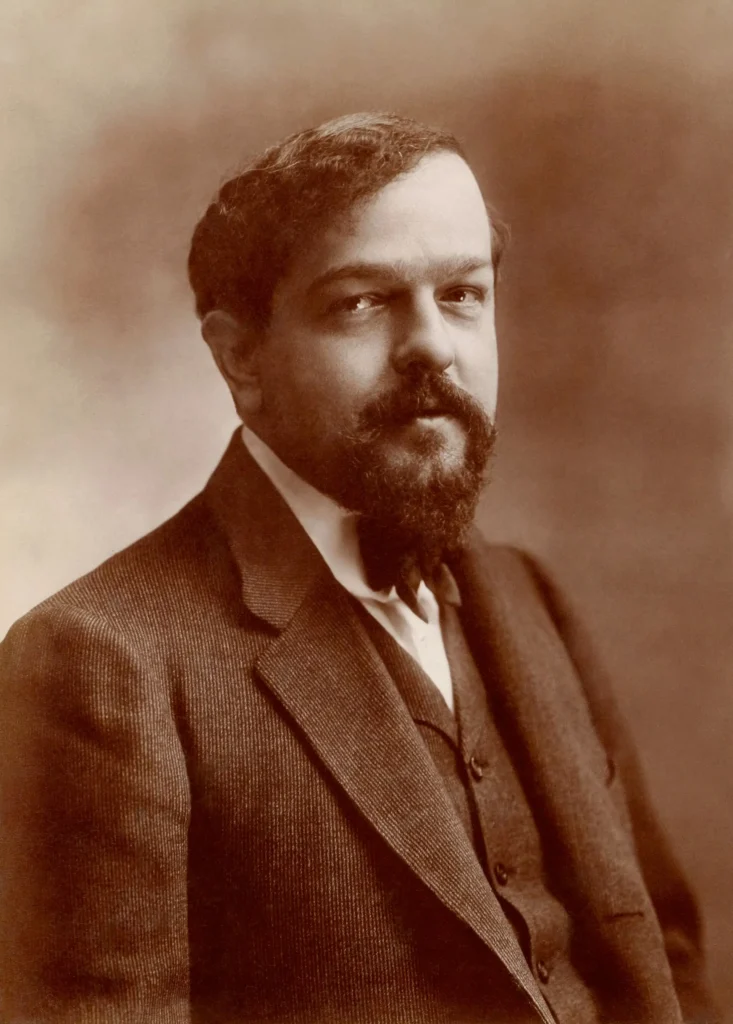
1862 – Claude Debussy
French composer Claude Debussy is one of the most important figures in the history of Western classical music.
His innovative approach to harmony, tone colour, rhythm and musical structure challenged many conventions of 19th-century European composition. Although frequently associated with Impressionism, Debussy himself disliked the term when applied to his music.
Among his best-known compositions are Clair de lune, La Mer, Prélude à l’après-midi d’un faune and the opera Pelléas et Mélisande.
Debussy’s musical language profoundly influenced later classical composers as well as jazz, film scoring and modern music. He died in Paris in 1918.
1867 – Maximilian Bircher-Benner
Swiss physician Maximilian Bircher-Benner advocated diets centred on raw fruits and vegetables.
He is particularly famous for developing muesli, originally intended as a nutritional dish for patients at his sanatorium. His ideas helped popularise raw-food and whole-food approaches to nutrition. He died in 1939.
1867 – Charles Francis Jenkins
American inventor Charles Francis Jenkins contributed to early motion-picture technology and mechanical television.
He conducted pioneering experiments involving the transmission of moving images and became one of the notable figures in the early history of television. He died in 1934.
1868 – Willis R. Whitney
American chemist Willis Rodney Whitney became the first director of the General Electric Research Laboratory.
His leadership helped establish industrial scientific research as an organised part of technological innovation in American corporations. He died in 1958.
1873 – Alexander Bogdanov
Russian physician, philosopher, writer and revolutionary Alexander Bogdanov had an unusually diverse intellectual career.
He participated in the early Bolshevik movement before later breaking with Vladimir Lenin. Bogdanov wrote philosophical works and science fiction and experimented with blood transfusions while researching ideas about rejuvenation.
He died in 1928 following a transfusion experiment.
1874 – Max Scheler
German philosopher Max Scheler made important contributions to phenomenology, ethics and philosophical anthropology.
His studies of values, emotions, human nature and society influenced numerous European thinkers during the 20th century. He died in 1928.
1880 – Gorch Fock
German writer Gorch Fock, born Johann Wilhelm Kinau, became known for literature depicting seafaring life and the culture of northern Germany.
His pen name later became famous through German naval training ships named Gorch Fock. He died during World War I in 1916.
1880 – George Herriman
American cartoonist George Herriman created the influential comic strip Krazy Kat.
Its unusual visual style, shifting landscapes, wordplay and unconventional characters made it one of the most admired comic strips of the 20th century. Herriman’s work influenced generations of cartoonists and artists. He died in 1944.
1881 – Bede Jarrett
English Dominican priest Bede Jarrett became an influential preacher, writer and administrator within the Dominican Order.
He wrote extensively about theology, spirituality and medieval history. He died in 1934.
1881 – James Newland
Australian soldier James Newland received the Victoria Cross, the highest military decoration for valour in the British and Commonwealth forces.
He was honoured for acts of bravery during World War I and later served in policing and military administration. He died in 1949.
1882 – Raymonde de Laroche
French aviation pioneer Raymonde de Laroche became the first woman in the world to receive a pilot’s licence.
She participated in aviation competitions and set records during the early years of powered flight, becoming one of the great pioneering women of aviation. She died in a flying accident in 1919.
1887 – Lutz Graf Schwerin von Krosigk
German politician Lutz Graf Schwerin von Krosigk served for many years as finance minister under Nazi Germany.
In the final days of World War II, he headed the short-lived Flensburg government under Karl Dönitz and also acted as foreign minister. He was later convicted at the Ministries Trial after the war. He died in 1977.
1890 – Cecil Kellaway
South African-born actor Cecil Kellaway built a successful international career in theatre and film.
He appeared in numerous Hollywood productions and received Academy Award nominations for supporting performances. He died in 1973.
1891 – Henry Bachtold
Australian soldier and engineer Henry Bachtold served during World War I before becoming involved in railway engineering.
His technical career was particularly associated with transport development in Australia. He died in 1983.
1891 – Jacques Lipchitz
Born in what is now Lithuania, Jacques Lipchitz became one of the major sculptors associated with Cubism.
After moving to Paris, he worked among avant-garde artists and developed a distinctive sculptural approach using simplified and geometric forms. He later settled in the United States. He died in 1973.
1893 – Wilfred Kitching
British religious leader Wilfred Kitching became the seventh General of The Salvation Army, serving as the organisation’s international leader during the 1950s and early 1960s. He died in 1977.
1893 – Dorothy Parker
American writer Dorothy Parker became famous for her sharp wit, poetry, short stories and literary criticism.
She was a prominent member of the Algonquin Round Table, a celebrated group of New York writers, actors and critics.
Parker’s concise humour and biting observations about relationships, society and human behaviour established her as one of the most memorable satirical voices of 20th-century American literature. She died in 1967.
1893 – Ernest H. Volwiler
American chemist Ernest H. Volwiler contributed significantly to pharmaceutical research.
Working with Ernest H. Donnell, he helped develop sodium thiopental, an intravenous anaesthetic that became widely used in medicine. He died in 1992.
1895 – László Almásy
Hungarian explorer, pilot and adventurer László Almásy became known for expeditions in the Sahara Desert.
His life later provided partial inspiration for the fictionalised central character of Michael Ondaatje’s novel The English Patient, although the literary character differs substantially from the historical Almásy. He died in 1951.
1895 – Paul Comtois
Canadian lawyer and politician Paul Comtois held several federal political positions before becoming the 21st Lieutenant Governor of Quebec. He died in office in 1966.
1896 – Laurence McKinley Gould
American geologist and polar explorer Laurence McKinley Gould participated in major Antarctic expeditions, including those led by Richard E. Byrd.
He later became an influential university educator and advocate for scientific research in polar regions. He died in 1995.
1897 – Bill Woodfull
Australian cricketer Bill Woodfull captained Australia during one of cricket’s most famous and controversial periods.
He led the Australian team during the notorious Bodyline series of 1932–33, when England used aggressive short-pitched bowling tactics.
Woodfull later became notable as the only Test captain to regain the Ashes twice. Outside cricket, he had a distinguished career in education. He died in 1965.
1900 – Lisy Fischer
Swiss-born pianist Lisy Fischer achieved recognition as a child prodigy and concert performer.
Her musical career took her across Europe and Britain, and she remained associated with classical piano performance for much of her life. She died in 1999.
1901–Present
1902 – Thomas Pelly
American lawyer and politician Thomas Pelly represented the state of Washington in the United States House of Representatives for two decades. He died in 1973.
1902 – Leni Riefenstahl
German filmmaker Leni Riefenstahl became one of cinema history’s most technically influential yet deeply controversial directors.
Her films Triumph of the Will and Olympia demonstrated innovative cinematography, editing and camera techniques but were closely connected with the propaganda apparatus of Nazi Germany.
Because of this relationship, her artistic legacy remains inseparable from debates about propaganda, political responsibility and the ethics of filmmaking. She died in 2003 at the age of 101.
1902 – Edward Rowe Snow
American historian and writer Edward Rowe Snow became known for books about New England maritime history, shipwrecks, lighthouses and coastal folklore.
He was also famous for continuing the tradition of delivering Christmas gifts to lighthouse keepers. He died in 1982.
1903 – Jerry Iger
American cartoonist and publisher Jerry Iger was an important figure in the formative years of the American comic-book industry.
Together with Will Eisner, he established Eisner & Iger, a studio that produced comic material for numerous publishers. He died in 1990.
1904 – Deng Xiaoping
Chinese political leader Deng Xiaoping became one of the most influential statesmen of the 20th century.
Although he did not always hold China’s highest formal office, Deng emerged as the country’s paramount leader after the death of Mao Zedong.
Beginning in the late 1970s, he promoted major economic reforms, including greater use of market mechanisms, foreign investment, agricultural reforms and the establishment of special economic zones.
These policies helped transform China from a largely closed planned economy into one of the world’s fastest-growing economies.
Deng remained a central political figure until the early 1990s and died in 1997.
1908 – Henri Cartier-Bresson
French photographer Henri Cartier-Bresson was one of the most influential photographers of the 20th century.
A pioneer of street photography and photojournalism, he became famous for capturing what he described as the “decisive moment”—the instant when visual composition and human action align perfectly.
He also co-founded the renowned photographic agency Magnum Photos in 1947.
His images of war, revolution, everyday life and major world personalities established new standards for documentary photography. He died in 2004.
1908 – Erwin Thiesies
German rugby player and coach Erwin Thiesies represented Germany internationally and later worked as a coach. He died in 1993.
1909 – Julius J. Epstein
American screenwriter Julius J. Epstein, working with his twin brother Philip and Howard Koch, helped write the screenplay for Casablanca.
The screenplay won the Academy Award for Best Adapted Screenplay and became one of the most celebrated scripts in film history. Epstein died in 2000.
1909 – Mel Hein
American football star Mel Hein became one of the great early players of the National Football League.
He spent his professional career with the New York Giants, earning recognition as both a centre and linebacker. He was inducted into the Pro Football Hall of Fame. He died in 1992.
1913 – Leonard Pagliero
British aviator and businessman Leonard Pagliero became associated with aviation and later commercial ventures. He lived to the age of 94 and died in 2008.
1913 – Bruno Pontecorvo
Italian-born physicist Bruno Pontecorvo made important contributions to nuclear and particle physics, especially the study of neutrinos.
A former member of Enrico Fermi’s research group, Pontecorvo later moved to the Soviet Union. Several of his theoretical ideas anticipated major discoveries in neutrino physics. He died in 1993.
1914 – Jack Dunphy
American novelist and playwright Jack Dunphy wrote fiction, drama and memoir.
He was also the longtime partner of writer Truman Capote. Dunphy died in 1992.
1914 – Connie B. Gay
American music executive Connie B. Gay played an important role in developing and promoting country music.
He helped popularise the term “country music” and was one of the founders of the Country Music Association and Country Music Hall of Fame and Museum. He died in 1989.
1915 – David Dellinger
American pacifist and political activist David Dellinger became a prominent opponent of war and militarism.
He was one of the defendants in the famous Chicago Seven trial stemming from protests at the 1968 Democratic National Convention. He died in 2004.
1915 – James Hillier
Canadian-born physicist James Hillier, working with Albert Prebus, helped construct one of the first successful electron microscopes in North America.
Electron microscopy revolutionised science by allowing researchers to examine structures far smaller than those visible with conventional light microscopes. Hillier died in 2007.
1915 – Edward Szczepanik
Polish economist and politician Edward Szczepanik became the final prime minister of the Polish government-in-exile before its symbolic transfer of authority to democratically elected Polish President Lech Wałęsa. He died in 2005.
1917 – John Lee Hooker
American blues musician John Lee Hooker became one of the most influential figures in the history of blues.
Known for his deep voice, distinctive guitar playing and driving rhythms, Hooker recorded classics including “Boogie Chillen’” and “Boom Boom.”
His style had a profound impact on blues, rock and popular music, influencing generations of musicians. He died in 2001.
1918 – Mary McGrory
American journalist Mary McGrory built a distinguished career as a political columnist.
She covered major events and personalities in American public life and became the first woman to win the Pulitzer Prize for Commentary. She died in 2004.
1920 – Ray Bradbury
American author Ray Bradbury became one of the world’s most celebrated writers of science fiction, fantasy and speculative literature.
His most famous works include Fahrenheit 451, The Martian Chronicles and Something Wicked This Way Comes.
Bradbury frequently explored censorship, technology, human relationships, memory and the consequences of social conformity.
Fahrenheit 451 in particular became a landmark literary work about book burning, censorship and intellectual freedom.
Bradbury’s imaginative storytelling influenced literature, film, television and popular culture worldwide. He died in 2012.
1920 – Denton Cooley
American heart surgeon Denton Cooley was a pioneer of cardiovascular surgery.
He performed thousands of complex heart operations and in 1969 implanted the first total artificial heart used as a temporary bridge to transplantation in a human patient.
Cooley helped establish the Texas Heart Institute and became one of the most important cardiac surgeons of the 20th century. He died in 2016.
1921 – Dinos Dimopoulos
Greek film director Dinos Dimopoulos directed numerous films and theatrical productions and became an important figure in postwar Greek cinema. He died in 2003.
1921 – Tony Pawson
English sportsman Tony Pawson played first-class cricket and football before becoming a respected sports journalist and author. He died in 2012.
1922 – Roberto Aizenberg
Argentine painter and sculptor Roberto Aizenberg became one of Argentina’s notable surrealist artists.
His works often featured mysterious architectural structures, geometric forms and dreamlike landscapes. He died in 1996.
1922 – Theoni V. Aldredge
Greek-American costume designer Theoni V. Aldredge worked extensively in theatre and film.
She won an Academy Award for the costumes of The Great Gatsby and also received numerous Tony Awards for Broadway productions. She died in 2011.
1922 – Frank Kelly Freas
American artist Frank Kelly Freas became one of science fiction’s most celebrated illustrators.
His artwork appeared on hundreds of magazine and book covers, including numerous issues of Mad Magazine. He won many Hugo Awards during his career. He died in 2005.
1924 – James Kirkwood Jr.
American playwright and author James Kirkwood Jr. co-wrote the book for the Broadway musical A Chorus Line.
The work became one of Broadway’s most successful musicals and earned Kirkwood and Nicholas Dante the Pulitzer Prize for Drama. Kirkwood died in 1989.
1924 – Harishankar Parsai
Indian writer Harishankar Parsai was one of the most influential satirists in modern Hindi literature.
His essays and stories used humour and satire to criticise hypocrisy, corruption, bureaucracy, social inequality and political behaviour.
Parsai transformed Hindi satire into a powerful form of social commentary and remains widely read in India. He received the Sahitya Akademi Award and died in 1995.
1925 – Honor Blackman
English actress Honor Blackman became internationally famous as Pussy Galore in the James Bond film Goldfinger.
She was also widely known for portraying Cathy Gale in the television series The Avengers. Blackman died in 2020.
1926 – Marc Bohan
French fashion designer Marc Bohan served as artistic director of Christian Dior for nearly three decades.
His elegant and restrained designs helped shape the fashion house’s identity during the second half of the 20th century. He died in 2023.
1926 – Bob Flanigan
American singer Bob Flanigan was a founding member of the vocal group The Four Freshmen, whose jazz-influenced harmonies influenced later groups including the Beach Boys. He died in 2011.
1928 – Tinga Seisay
Sierra Leonean academic and diplomat Tinga Seisay contributed to education and diplomatic service in his country. He died in 2015.
1928 – Karlheinz Stockhausen
German composer Karlheinz Stockhausen became one of the most influential and experimental composers of the postwar era.
He pioneered electronic music, serial composition, spatial music and innovative approaches to musical performance.
His experimental techniques influenced not only contemporary classical music but also electronic musicians, rock artists and avant-garde composers. He died in 2007.
1929 – Valery Alekseyev
Russian anthropologist Valery Alekseyev conducted research on human evolution, physical anthropology and ancient populations. He died in 1991.
1929 – Roy Clay Sr.
American computer scientist Roy Clay Sr. played an important role in the early development of Silicon Valley.
He worked at Hewlett-Packard, where he led computer-development teams, and later became an entrepreneur. He also advocated for greater opportunities for African Americans in the technology industry. He died in 2024.
1929 – Ulrich Wegener
German police officer Ulrich Wegener founded the elite counter-terrorism unit GSG 9 following the 1972 Munich Olympic massacre.
He gained international recognition after GSG 9 successfully rescued hostages aboard Lufthansa Flight 181 in Mogadishu in 1977. He died in 2017.
1930 – Gilmar dos Santos Neves
Brazilian goalkeeper Gilmar was part of Brazil’s victorious teams at the 1958 and 1962 FIFA World Cups.
He is regarded as one of the greatest goalkeepers in Brazilian football history. He died in 2013.
1932 – Gerald P. Carr
American astronaut and U.S. Marine Corps officer Gerald Carr commanded Skylab 4, the third and final crewed mission to America’s first space station.
The crew spent more than 84 days in orbit, setting a then-record for human spaceflight duration. Carr died in 2020.
1933 – Sylva Koscina
Italian actress Sylva Koscina appeared in numerous European films, including historical epics, comedies and international productions. She died in 1994.
1934 – Norman Schwarzkopf Jr.
U.S. Army General Norman Schwarzkopf Jr. became internationally known as commander of coalition forces during the 1991 Gulf War.
As head of United States Central Command, he oversaw Operation Desert Storm, the military campaign that expelled Iraqi forces from Kuwait. He died in 2012.
1935 – Annie Proulx
American author Annie Proulx is an acclaimed novelist and short-story writer.
Her novel The Shipping News won both the Pulitzer Prize for Fiction and the National Book Award.
She also wrote the short story “Brokeback Mountain,” which was adapted into the award-winning 2005 film of the same name.
1936 – Chuck Brown
American musician Chuck Brown became known as the “Godfather of Go-Go,” the funk-derived musical style closely associated with Washington, D.C.
His energetic performances and rhythmic innovations helped create a distinctive regional music culture. He died in 2012.
1936 – John Callaway
American journalist John Callaway was known for his thoughtful interviews and long career in public broadcasting, particularly in Chicago. He died in 2009.
1936 – Dale Hawkins
American singer Dale Hawkins became famous for the rockabilly hit “Susie Q.”
The song was later recorded by numerous artists, most famously Creedence Clearwater Revival. Hawkins died in 2010.
1936 – Werner Stengel
German engineer Werner Stengel became one of the most influential designers in the history of modern roller coasters.
He helped develop engineering systems used in hundreds of amusement rides around the world and worked on record-breaking coasters including Millennium Force and Top Thrill Dragster.
1938 – Jean Berkey
American politician Jean Berkey served in the Washington State Legislature and was involved in public policy at the state level. She died in 2013.
1939 – Valerie Harper
American actress Valerie Harper became famous for portraying Rhoda Morgenstern on The Mary Tyler Moore Show and its spin-off Rhoda.
Her performances earned several Emmy Awards and made Rhoda one of American television’s best-known characters of the 1970s. Harper died in 2019.
1939 – Carl Yastrzemski
American baseball legend Carl Yastrzemski, commonly known as “Yaz,” spent his entire Major League Baseball career with the Boston Red Sox.
In 1967 he won the Triple Crown, leading the American League in batting average, home runs and runs batted in.
He accumulated more than 3,000 hits and was inducted into the Baseball Hall of Fame.
1940 – Bill McCartney
American football coach Bill McCartney led the University of Colorado football program and guided the Buffaloes to a share of the 1990 national championship. He died in 2025.
1941 – Bill Parcells
American football coach Bill Parcells is one of the most successful coaches in NFL history.
He led the New York Giants to two Super Bowl championships and later rebuilt several other NFL teams. He was inducted into the Pro Football Hall of Fame.
1943 – Alun Michael
Welsh politician Alun Michael became the first First Secretary of Wales, the office later renamed First Minister of Wales.
He also served in the British Parliament and later as a police and crime commissioner.
1943 – Masatoshi Shima
Japanese engineer Masatoshi Shima played a central role in the creation of the Intel 4004, widely regarded as the first commercially available single-chip microprocessor.
His engineering contributions helped establish the foundation for the modern microprocessor industry and therefore for personal computing and digital electronics.
1944 – Roger Cashmore
British physicist Roger Cashmore has contributed to particle physics research and scientific leadership, including work associated with major international research institutions.
1945 – David Chase
American television writer and producer David Chase created The Sopranos.
The HBO drama, centred on mob boss Tony Soprano, became one of the most critically acclaimed television series ever produced and is widely credited with helping usher in the modern era of prestige television.
1945 – Ron Dante
American singer and producer Ron Dante was the lead vocalist behind the fictional pop group The Archies, whose song “Sugar, Sugar” became a major international hit.
He also worked extensively as a producer, including collaborations with singer Barry Manilow.
1947 – Cindy Williams
American actress Cindy Williams became best known for playing Shirley Feeney in the popular television sitcom Laverne & Shirley.
She also appeared in acclaimed films such as American Graffiti and The Conversation. Williams died in 2023.
1948 – David Marks
American musician David Marks was an early member of The Beach Boys and played guitar on several of the band’s early recordings.
1948 – Carolyn L. Mazloomi
American artist, curator and scholar Carolyn L. Mazloomi became a leading figure in African-American quilting and fibre arts.
She founded the Women of Color Quilters Network and helped promote recognition of quilting as an important artistic and cultural tradition.
1949 – Joop Donkervoort
Dutch entrepreneur Joop Donkervoort founded Donkervoort Automobielen, a company known for lightweight, high-performance sports cars.
1949 – Diana Nyad
American long-distance swimmer Diana Nyad became internationally famous for endurance swimming.
In 2013, at age 64, she completed a swim from Cuba to Florida without a shark cage, a feat that attracted worldwide attention.
1950 – Ray Burris
American professional baseball pitcher Ray Burris played in Major League Baseball for several teams before becoming a pitching coach.
1950 – Scooter Libby
American lawyer and government official I. Lewis “Scooter” Libby served as chief of staff to Vice President Dick Cheney and held senior national-security positions during the George W. Bush administration.
1952 – Peter Laughner
American musician and songwriter Peter Laughner was a key figure in Cleveland’s early punk and underground rock scene.
He helped found bands including Pere Ubu and Rocket from the Tombs. He died in 1977.
1953 – Paul Ellering
American professional wrestling manager Paul Ellering became best known for managing The Road Warriors, one of wrestling’s most famous tag teams.
He was inducted into the WWE Hall of Fame.
1955 – Chiranjeevi
Indian actor, producer and politician Chiranjeevi, born Konidela Sivasankara Varaprasad, is one of the most influential stars in Telugu cinema.
Beginning his career in the late 1970s, he became known for his screen presence, action performances, dancing ability and mass appeal.
His major films include Khaidi, Swayam Krushi, Jagadeka Veerudu Athiloka Sundari, Gharana Mogudu, Indra and Tagore.
His popularity earned him the nickname “Megastar.”
Chiranjeevi also entered politics, founded the Praja Rajyam Party and later served as India’s Minister of Tourism.
He has received numerous honours for his contribution to Indian cinema, including the Padma Bhushan and Padma Vibhushan.
1956 – Paul Molitor
American baseball player Paul Molitor recorded more than 3,300 career hits during his Major League Baseball career.
He was named World Series MVP in 1993 with the Toronto Blue Jays and was later inducted into the Baseball Hall of Fame.
1956 – Peter Taylor
Australian cricketer Peter Taylor represented Australia in Test and One Day International cricket as an off-spin bowler.
1957 – Steve Davis
English snooker champion Steve Davis dominated professional snooker during much of the 1980s.
He won the World Snooker Championship six times and became one of the sport’s first major television stars.
1957 – Holly Dunn
American country singer-songwriter Holly Dunn achieved several major hits during the 1980s and 1990s, including “Daddy’s Hands.” She died in 2016.
1958 – Colm Feore
Canadian-American actor Colm Feore is known for an extensive career spanning theatre, film and television.
His work includes major Shakespearean roles as well as appearances in productions such as The Chronicles of Riddick, Thor and The Umbrella Academy.
1958 – Stevie Ray
American professional wrestler Stevie Ray became best known as one half of the tag team Harlem Heat with his brother Booker T.
1958 – Vernon Reid
British-born American guitarist Vernon Reid founded the rock band Living Colour.
Known for his technically sophisticated guitar style, Reid blends rock, metal, funk, jazz and experimental influences.
1959 – Juan Croucier
Cuban-American musician Juan Croucier became best known as bassist for the American rock band Ratt.
1959 – Pia Gjellerup
Danish politician Pia Gjellerup served in several senior government posts, including as Denmark’s Minister of Finance.
1959 – Mark Williams
English actor Mark Williams is widely recognised for playing Arthur Weasley in the Harry Potter film series.
He has also appeared in television programmes including The Fast Show and starred in the mystery series Father Brown.
1960 – Holger Gehrke
German former footballer Holger Gehrke later became a goalkeeper coach and football manager.
1960 – Collin Raye
American country singer Collin Raye achieved major success during the 1990s with songs including “Love, Me” and “In This Life.”
1960 – Regina Taylor
American actress and playwright Regina Taylor has had a distinguished career in theatre, television and film.
She became the first Black woman to play Juliet in a Broadway production of Shakespeare’s Romeo and Juliet.
1961 – Andrés Calamaro
Argentine singer-songwriter Andrés Calamaro is one of the most influential figures in Spanish-language rock.
He gained fame with Los Rodríguez and through a successful solo career.
1961 – Roland Orzabal
British musician Roland Orzabal co-founded Tears for Fears.
As a singer, songwriter and guitarist, he helped create major international hits including “Everybody Wants to Rule the World,” “Shout,” and “Mad World.”
1962 – Stefano Tilli
Italian sprinter Stefano Tilli competed internationally in the 100 and 200 metres and won medals at European-level athletics competitions.
1963 – Tori Amos
American singer-songwriter and pianist Tori Amos is known for emotionally intense songwriting and piano-driven alternative music.
Albums including Little Earthquakes, Under the Pink and Boys for Pele established her as one of the most distinctive singer-songwriters of the 1990s.
1963 – James DeBarge
American singer James DeBarge was a member of the family musical group DeBarge, known for R&B and soul hits during the 1980s.
1964 – Mats Wilander
Swedish tennis champion Mats Wilander won seven Grand Slam singles titles.
His greatest season came in 1988, when he won the Australian Open, French Open and US Open and rose to world No. 1.
Wilander later became a respected tennis commentator and coach.
1965 – Wendy Botha
South African-born surfer Wendy Botha became one of the leading women’s professional surfers of her era.
She won multiple world surfing titles while representing South Africa and Australia.
1965 – David Reimer
Canadian David Reimer became the subject of one of the most controversial cases in the history of psychology and medical ethics.
After a severe injury during an infant circumcision, he was surgically reassigned and raised as a girl following advice from psychologist John Money.
Reimer later rejected the female identity assigned to him and lived as a man.
His case became influential in debates about gender development, informed consent and medical ethics. He died in 2004.
1966 – GZA
American rapper GZA, born Gary Grice, is a founding member of the influential hip-hop collective Wu-Tang Clan.
Known for complex lyricism and intellectual wordplay, he released the acclaimed solo album Liquid Swords in 1995.
1966 – Rob Witschge
Dutch footballer Rob Witschge played for clubs including Ajax and Feyenoord and represented the Netherlands internationally.
1967 – Adewale Akinnuoye-Agbaje
British actor Adewale Akinnuoye-Agbaje has appeared in major television and film productions including Oz, Lost, The Bourne Identity and Suicide Squad.
1967 – Ty Burrell
American actor and comedian Ty Burrell is best known for playing Phil Dunphy in the hit sitcom Modern Family.
His performance earned multiple Emmy Awards and made Phil one of modern television comedy’s most recognisable characters.
1967 – Paul Colman
Australian musician Paul Colman is a singer-songwriter and guitarist known for Christian rock and his work with the Paul Colman Trio.
1967 – Layne Staley
American singer Layne Staley was the lead vocalist of Alice in Chains, one of the defining rock bands of Seattle’s grunge era.
His distinctive voice can be heard on influential releases including Dirt, Facelift and Jar of Flies.
Staley’s intense vocal style influenced generations of rock and metal singers. He died in 2002.
1968 – Casper Christensen
Danish comedian, actor and television personality Casper Christensen became one of Denmark’s best-known comedy performers and writers.
1968 – Aleksandr Mostovoi
Russian footballer Aleksandr Mostovoi represented the Soviet Union, CIS and Russia internationally and became particularly associated with Spanish club Celta Vigo.
1968 – Elisabeth Murdoch
Australian-born media executive Elisabeth Murdoch built a successful career in television production and media investment.
She founded production company Shine, which became a major international entertainment business.
1968 – Horst Skoff
Austrian tennis player Horst Skoff achieved success on the ATP Tour and represented Austria in Davis Cup competition. He died in 2008.
1970 – Charlie Connelly
British author and broadcaster Charlie Connelly has written books on travel, history, football and popular culture.
1970 – Giada De Laurentiis
Italian-American chef and television personality Giada De Laurentiis became famous through Food Network programmes devoted to Italian and Mediterranean-inspired cooking.
She is also a bestselling cookbook author and restaurateur.
1970 – Tímea Nagy
Hungarian fencer Tímea Nagy became one of the leading épée competitors of her generation.
She won Olympic gold medals in individual épée in 2000 and 2004.
1971 – Richard Armitage
English actor Richard Armitage gained international recognition through television and film roles.
He played Thorin Oakenshield in Peter Jackson’s The Hobbit film trilogy and has appeared in productions including North & South, Spooks and Hannibal.
1971 – Craig Finn
American singer-songwriter Craig Finn is best known as frontman of the indie rock band The Hold Steady.
1971 – Rick Yune
American actor Rick Yune has appeared in action films including Die Another Day, The Fast and the Furious and Olympus Has Fallen.
1972 – Okkert Brits
South African athlete Okkert Brits became one of the world’s leading pole vaulters during the 1990s and was among the early members of the six-metre club.
1972 – Paul Doucette
American musician Paul Doucette is a member of the rock band Matchbox Twenty, initially serving as drummer and later playing rhythm guitar and keyboards.
1972 – Max Wilson
Brazilian racing driver Max Wilson competed internationally in motorsport, including Formula 3000, IndyCar and Australian V8 Supercars.
1973 – Roslina Bakar
Malaysian sport shooter Roslina Bakar represented Malaysia in international shooting competitions.
1973 – Howie Dorough
American singer Howie Dorough is a member of the hugely successful pop group Backstreet Boys.
The group became one of the best-selling boy bands in music history, with hits such as “I Want It That Way” and “Everybody (Backstreet’s Back).”
1973 – Kristen Wiig
American actress, comedian and writer Kristen Wiig rose to fame as a cast member on Saturday Night Live.
She co-wrote and starred in the comedy Bridesmaids, which became both a commercial and critical success and earned her an Academy Award nomination for Best Original Screenplay.
Wiig has since built a diverse career in comedy, drama, animation and major film franchises.
1973 – Eurelijus Žukauskas
Lithuanian basketball player Eurelijus Žukauskas represented his country internationally and won an Olympic bronze medal as part of Lithuania’s national team.
1974 – Cory Gardner
American politician Cory Gardner represented Colorado in the U.S. House of Representatives and later served as a United States senator.
1974 – Jenna Leigh Green
American actress Jenna Leigh Green became known for playing Libby Chessler in the television series Sabrina the Teenage Witch and has also performed extensively in musical theatre.
1974 – Agustín Pichot
Argentine rugby star Agustín Pichot captained Argentina’s national team and helped the country finish third at the 2007 Rugby World Cup.
He later became an influential international rugby administrator.
1975 – Clint Bolton
Australian goalkeeper Clint Bolton enjoyed a long professional football career and won multiple domestic championships.
1975 – Rodrigo Santoro
Brazilian actor Rodrigo Santoro gained international recognition through roles in 300, Love Actually, Lost and Westworld.
He has worked extensively in both Brazilian and international cinema.
1976 – Marius Bezykornovas
Lithuanian footballer Marius Bezykornovas played professionally in Lithuania and represented his country internationally.
1976 – Bryn Davies
American musician Bryn Davies is a multi-instrumentalist known for performing bass, cello and piano across several genres.
1976 – Laurent Hernu
French athlete Laurent Hernu competed internationally in the decathlon.
1976 – Jeff Weaver
American pitcher Jeff Weaver played in Major League Baseball for several teams and was part of the 2006 World Series-winning St. Louis Cardinals.
1976 – Randy Wolf
American pitcher Randy Wolf enjoyed a lengthy Major League Baseball career, most notably with the Philadelphia Phillies.
1977 – Heiðar Helguson
Icelandic footballer Heiðar Helguson played for several English clubs and represented Iceland internationally.
1977 – Keren Cytter
Israeli artist and writer Keren Cytter is known for experimental video works, films, novels and theatrical pieces.
1978 – James Corden
English actor, comedian and television presenter James Corden gained recognition as co-creator and star of the British sitcom Gavin & Stacey.
He later hosted The Late Late Show with James Corden in the United States, where segments including Carpool Karaoke became internationally popular.
He has also acted in films, television programmes and stage productions, winning a Tony Award for his performance in One Man, Two Guvnors.
1978 – Ioannis Gagaloudis
Greek basketball player Ioannis Gagaloudis had a long professional career with numerous clubs in Greece.
1979 – Brandon Adams
American actor Brandon Adams became known for childhood roles in films and television productions including The Sandlot and The Mighty Ducks.
1979 – Matt Walters
American football player Matt Walters competed professionally as a defensive lineman in the NFL.
1980 – Roland Benschneider
German footballer Roland Benschneider played professionally as a defender before moving into football administration.
1980 – Nicolas Macrozonaris
Canadian sprinter Nicolas Macrozonaris represented Canada internationally in the 100 metres and other sprint events.
1980 – Seiko Yamamoto
Japanese wrestler Seiko Yamamoto became a multiple-time world champion in women’s freestyle wrestling.
1981 – Alex Holmes
American football player Alex Holmes competed as a tight end in professional football.
1981 – Jang Hyun-kyu
South Korean footballer Jang Hyun-kyu played professionally in the K League. He died in 2012.
1981 – Christina Obergföll
German javelin thrower Christina Obergföll was one of the world’s leading athletes in her event.
She won an Olympic silver medal and became world champion in 2013.
1982 – Sean Rash
American professional bowler Sean Rash became one of the leading competitors on the Professional Bowlers Association Tour and won numerous PBA titles.
1983 – Theo Bos
Dutch cyclist Theo Bos became a multiple-time world champion in track cycling before successfully transitioning to road racing.
1983 – Jahri Evans
American football player Jahri Evans became one of the NFL’s leading offensive guards.
He played a major role in the New Orleans Saints’ victory in Super Bowl XLIV.
1984 – Lee Camp
English goalkeeper Lee Camp played for numerous clubs in the English Football League and also represented Northern Ireland internationally.
1984 – Lawrence Quaye
Ghanaian-born footballer Lawrence Quaye played much of his career in Qatar and later represented Qatar internationally.
1985 – Luke Russert
American journalist Luke Russert worked as a television correspondent covering politics and Congress before leaving daily broadcast journalism.
1985 – Jey Uso
American professional wrestler Jey Uso, born Joshua Fatu, is part of the renowned Anoaʻi wrestling family.
Together with his twin brother Jimmy, he formed The Usos, one of WWE’s most successful tag teams.
Jey later achieved major success as a singles performer and became one of WWE’s most popular stars.
1985 – Jimmy Uso
American professional wrestler Jimmy Uso, born Jonathan Fatu, is Jey Uso’s twin brother.
As The Usos, the brothers won numerous WWE tag-team championships and became central figures in The Bloodline storyline.
1985 – Salih Yoluç
Turkish racing driver Salih Yoluç has competed internationally in endurance racing and became the first Turkish driver to win the 24 Hours of Le Mans in his class.
1986 – Stephen Ireland
Irish footballer Stephen Ireland played as an attacking midfielder for Manchester City, Aston Villa and several other English clubs.
1986 – Tokushōryū Makoto
Japanese sumo wrestler Tokushōryū Makoto achieved one of sumo’s most remarkable tournament victories when he unexpectedly won the top-division championship in January 2020 despite entering the tournament near the bottom of the rankings.
1987 – Apollo Crews
American professional wrestler Apollo Crews, born Sesugh Uhaa, has competed for WWE and held championships including the Intercontinental and United States titles.
1989 – Giacomo Bonaventura
Italian footballer Giacomo Bonaventura has played at the highest level of Italian football for clubs including Atalanta, AC Milan and Fiorentina and has represented Italy internationally.
1989 – Aleksandra Gajewska
Polish politician Aleksandra Gajewska has served as a member of the Polish parliament and has been active in national public affairs.
1990 – Randall Cobb
American football player Randall Cobb became known as a versatile wide receiver and return specialist, particularly during his years with the Green Bay Packers.
1990 – Drew Hutchison
American baseball pitcher Drew Hutchison has played for several Major League Baseball organisations.
1990 – Robbie Rochow
Australian rugby league player Robbie Rochow competed professionally in the National Rugby League.
1990 – Adam Thielen
American football wide receiver Adam Thielen rose from an undrafted free agent to become an NFL star.
He became particularly associated with the Minnesota Vikings and earned multiple Pro Bowl selections.
1991 – Federico Macheda
Italian footballer Federico Macheda became internationally known as a teenager after scoring a dramatic winning goal for Manchester United against Aston Villa in 2009.
He later played professionally in several European countries.
1991 – Brayden Schenn
Canadian ice hockey player Brayden Schenn became an NHL forward and won the Stanley Cup with the St. Louis Blues in 2019.
1992 – Ema Burgić Bucko
Bosnian tennis player Ema Burgić Bucko represented Bosnia and Herzegovina in international tennis competition.
1993 – Laura Dahlmeier
German biathlete Laura Dahlmeier became one of the greatest biathletes of her generation.
At the 2018 Winter Olympics, she won two gold medals and one bronze. She was also a multiple-time world champion and World Cup overall winner.
After retiring from elite sport, she became an accomplished mountaineer. Dahlmeier died in a mountaineering accident in 2025.
1993 – Dillon Danis
American combat-sports athlete Dillon Danis became known for Brazilian jiu-jitsu and later competed professionally in mixed martial arts and crossover combat events.
1994 – Israel Broussard
American actor Israel Broussard has appeared in films including The Bling Ring, Happy Death Day and its sequel.
1994 – Olli Määttä
Finnish ice hockey defenceman Olli Määttä became a two-time Stanley Cup champion with the Pittsburgh Penguins.
He has also represented Finland internationally.
1995 – Dua Lipa
English-Albanian singer-songwriter Dua Lipa is one of the most successful pop artists of her generation.
She gained international recognition with songs including “New Rules,” “Don’t Start Now,” “Levitating,” “Physical,” and “One Kiss.”
Her 2020 album Future Nostalgia received widespread critical acclaim and helped revive disco-influenced dance-pop in mainstream music.
Lipa has received numerous honours, including Grammy Awards and Brit Awards, and has become a major global figure in music, fashion and popular culture.
1996 – Jessica-Jane Applegate
British Paralympic swimmer Jessica-Jane Applegate has won multiple international medals, including Paralympic gold.
She has competed primarily in S14 classification events for athletes with intellectual impairments.
1996 – Jeon So-min
South Korean singer-songwriter Jeon So-min, professionally known as Somin, became known as a member of the co-ed K-pop group KARD.
1997 – Maxx Crosby
American football defensive end Maxx Crosby has become one of the leading pass rushers in the NFL.
Playing for the Raiders organisation, he has earned multiple Pro Bowl selections and recognition for his high-impact defensive performances.
1997 – Fanum
American content creator Fanum, born Roberto Gonzalez, became widely known through livestreaming and online entertainment.
He is associated with the creator collective AMP and helped popularise internet expressions including “Fanum tax.”
1997 – Lautaro Martínez
Argentine footballer Lautaro Martínez is one of the leading strikers of his generation.
He became a major player for Inter Milan, helping the club win domestic titles and serving as team captain.
With Argentina, Martínez won the 2021 Copa América, the 2022 FIFA World Cup and further international honours.
Known for his finishing, pressing, movement and physical strength, he has established himself as a prominent figure in both European and international football.
2001 – LaMelo Ball
American basketball player LaMelo Ball emerged as one of the NBA’s most prominent young guards.
Selected third overall in the 2020 NBA Draft by the Charlotte Hornets, he won the NBA Rookie of the Year Award in 2021 and later became an NBA All-Star.
Ball is known for creative passing, long-range shooting and an entertaining style of play.
2003 – Cooper Connolly
Australian cricketer Cooper Connolly is a left-handed batter and spin-bowling all-rounder.
He captained Australia’s under-19 team and later progressed into senior domestic and international cricket, becoming regarded as one of Australia’s promising young players.
2005 – Stiliana Nikolova
Bulgarian rhythmic gymnast Stiliana Nikolova emerged as one of the leading gymnasts of her generation.
She has won major medals at World and European Championships and is recognised for her technical difficulty, flexibility and expressive routines.
Most Famous People Born on August 22
Among the many people born on August 22, several have had particularly broad international influence.
Claude Debussy (1862) transformed musical composition through innovative harmony and orchestration. Deng Xiaoping (1904) reshaped China’s economic direction and influenced the country’s emergence as a major global economic power. Henri Cartier-Bresson (1908) helped define modern photojournalism and street photography.
In literature, Ray Bradbury (1920) produced enduring works exploring technology, censorship and the future of society, while Indian satirist Harishankar Parsai (1924) helped establish modern Hindi satire as a powerful form of social criticism.
August 22 is also an important date in Indian popular culture because it is the birthday of Chiranjeevi (1955), one of Telugu cinema’s most influential stars.
The date has produced major figures in music, including John Lee Hooker, Tori Amos, Roland Orzabal, Layne Staley, GZA and Dua Lipa.
Sports personalities born on August 22 include Bill Woodfull, Steve Davis, Mats Wilander, Tímea Nagy, Lautaro Martínez, LaMelo Ball, Adam Thielen, Christina Obergföll and Laura Dahlmeier.
In entertainment, the birthday is shared by Honor Blackman, Valerie Harper, Ty Burrell, Kristen Wiig, Rodrigo Santoro, James Corden and Richard Armitage.
From the inventions of Denis Papin, Henry Maudslay and Paul Nipkow to the computer engineering of Masatoshi Shima, the literature of Dorothy Parker and Ray Bradbury, the music of Claude Debussy and Dua Lipa, and the sporting achievements of Mats Wilander and Lautaro Martínez, August 22 has produced an unusually diverse group of individuals whose work has influenced science, culture, politics, technology, entertainment and sport around the world.
Deaths on August 22
Across the centuries, August 22 has marked the deaths of monarchs, political leaders, scientists, writers, artists, military figures, musicians, athletes, and social reformers. Among the most historically significant are Richard III of England, who died at the Battle of Bosworth Field in 1485; Warren Hastings, the first Governor-General of Bengal; Irish revolutionary leader Michael Collins; Kenya’s first president Jomo Kenyatta; Indian literary giant U. R. Ananthamurthy; and Italian singer-songwriter Toto Cutugno.
Pre-1600
- 408 – Stilicho (born c. 359): A powerful Roman general of Vandal ancestry who served as magister militum under Western Roman emperor Honorius. Once one of the most influential military figures in the Western Empire, Stilicho was accused of conspiracy and executed at Ravenna during a period of severe political instability.
- 1155 – Emperor Konoe of Japan (born 1139): The 76th emperor of Japan, Konoe ascended the throne as a child in 1142. His reign occurred during the late Heian period, when retired emperors and powerful aristocratic families exercised considerable influence over imperial government.
- 1241 – Pope Gregory IX (born c. 1145): Pope from 1227 until his death, Gregory IX was a major medieval church leader. His pontificate was particularly associated with conflicts with Holy Roman Emperor Frederick II, the development of canon law, and the institutionalization of papal inquisitorial procedures.
- 1280 – Pope Nicholas III (born c. 1225): Giovanni Gaetano Orsini served as pope from 1277 to 1280. A member of the influential Orsini family, his relatively short pontificate was notable for attempts to strengthen papal political authority in Italy.
- 1304 – John II, Count of Holland (born c. 1247): A nobleman who ruled Hainaut and later Holland and Zeeland. His rule helped establish the House of Avesnes in the northern Low Countries.
- 1338 – William II, Duke of Athens (born 1312): A member of the House of Barcelona who held the title of Duke of Athens during the period of Aragonese influence in medieval Greece.
- 1350 – Philip VI of France (born 1293): The first French king of the House of Valois, ruling from 1328 until 1350. His reign saw the beginning of the Hundred Years’ War with England and the devastating arrival of the Black Death in France.
- 1358 – Isabella of France (born c. 1295): Queen consort of England as the wife of Edward II and mother of Edward III. Isabella played a decisive role in the political crisis that resulted in Edward II’s deposition in 1327.
- 1425 – Eleanor, Princess of Asturias (born 1423): The short-lived daughter of King John II of Castile and Maria of Aragon. She was briefly heir presumptive to the Castilian throne.
- 1456 – Vladislav II of Wallachia: A 15th-century ruler of Wallachia and rival of Vlad III, better known as Vlad the Impaler. Their struggle formed part of the turbulent politics of Wallachia amid increasing Ottoman influence.
- 1485 – Richard III of England (born 1452): One of the most famous deaths associated with August 22. Richard III was killed fighting the forces of Henry Tudor at the Battle of Bosworth Field. His death effectively ended Plantagenet rule and paved the way for Henry VII and the Tudor dynasty.
- 1485 – James Harrington: A Yorkist knight who fought for Richard III and was killed during the Battle of Bosworth.
- 1485 – John Howard, 1st Duke of Norfolk (born c. 1425): A leading supporter of Richard III and commander of part of the royal army at Bosworth. He was killed during the battle.
- 1485 – Richard Ratcliffe: A close supporter and adviser of Richard III who also died fighting for the Yorkist cause at Bosworth.
- 1485 – William Brandon (born c. 1456): Henry Tudor’s standard-bearer at Bosworth. Brandon was killed during the battle, traditionally associated with Richard III’s final charge.
- 1532 – William Warham (born c. 1450): Archbishop of Canterbury from 1503 until his death. He served during the reigns of Henry VII and Henry VIII and witnessed the early stages of the religious and political crisis surrounding Henry VIII’s marriage.
- 1545 – Charles Brandon, 1st Duke of Suffolk (born c. 1484): An English courtier, military commander and close friend of Henry VIII. His marriage to Mary Tudor, the king’s sister and former queen of France, made him one of Tudor England’s most prominent nobles.
- 1553 – John Dudley, 1st Duke of Northumberland (born 1504): One of England’s most powerful statesmen during Edward VI’s reign. After attempting to place Lady Jane Grey on the throne, he was arrested following Mary I’s accession and executed for high treason.
- 1572 – Thomas Percy, 7th Earl of Northumberland (born 1528): A prominent Catholic nobleman and one of the leaders of the Rising of the North against Elizabeth I. He was eventually captured and executed at York.
- 1584 – Jan Kochanowski (born 1530): One of the greatest figures in Polish Renaissance literature. His poetry played an important role in establishing Polish as a sophisticated literary language.
- 1599 – Luca Marenzio (born c. 1553): An influential Italian Renaissance composer particularly celebrated for his madrigals. His compositions influenced musical developments in Italy and elsewhere in Europe.
1601–1900
- 1607 – Bartholomew Gosnold (born 1571): An English explorer, lawyer and important promoter of English colonization in North America. He was involved in establishing Jamestown in Virginia and died only months after the settlement was founded.
- 1652 – Jacob De la Gardie (born 1583): A Swedish field marshal and statesman who played a prominent role in Swedish military campaigns in Russia and eastern Europe.
- 1664 – Maria Cunitz (born c. 1610): A Silesian astronomer and mathematician remembered for Urania Propitia, which simplified astronomical calculations based on Johannes Kepler’s planetary tables.
- 1680 – John George II, Elector of Saxony (born 1613): Elector of Saxony from 1656 until his death and an important German prince within the Holy Roman Empire.
- 1681 – Philippe Delano (born c. 1602): An early settler of Plymouth Colony whose descendants became part of the prominent American Delano family.
- 1701 – John Granville, 1st Earl of Bath (born 1628): English soldier and statesman associated with the Restoration of Charles II.
- 1711 – Louis François, Duke of Boufflers (born 1644): A distinguished French marshal who served Louis XIV and commanded French forces during major European conflicts.
- 1752 – William Whiston (born 1667): English mathematician, theologian and natural philosopher who succeeded Isaac Newton as Lucasian Professor of Mathematics at Cambridge before losing the position because of his religious views.
- 1773 – George Lyttelton, 1st Baron Lyttelton (born 1709): British politician, writer and patron of literature who briefly served as Chancellor of the Exchequer.
- 1793 – Louis de Noailles (born 1713): French nobleman and military commander who became a Marshal of France.
- 1797 – Dagobert Sigmund von Wurmser (born 1724): Austrian field marshal best known for commanding Habsburg forces against revolutionary France during the French Revolutionary Wars.
- 1806 – Jean-Honoré Fragonard (born 1732): One of the most celebrated painters of the French Rococo. His paintings are famous for their energetic brushwork, romantic subjects and playful atmosphere.
- 1818 – Warren Hastings (born 1732): The first Governor-General of Bengal and a major figure in the consolidation of British power in India. His controversial administration led to a lengthy impeachment trial in Britain, from which he was ultimately acquitted.
- 1828 – Franz Joseph Gall (born 1758): German-born physician and neuroanatomist known for studying relationships between areas of the brain and mental functions. He also developed phrenology, a historically influential theory that was later rejected as pseudoscientific.
- 1850 – Nikolaus Lenau (born 1802): Austrian poet known for melancholy Romantic poetry dealing with nature, longing and despair.
- 1861 – Xianfeng Emperor (born 1831): Emperor of China’s Qing dynasty from 1850 to 1861. His reign coincided with the enormous Taiping Rebellion and the Second Opium War.
- 1888 – Ágoston Trefort (born 1817): Hungarian politician and education minister who contributed significantly to the development of education and cultural institutions in 19th-century Hungary.
- 1891 – Jan Neruda (born 1834): Influential Czech journalist, poet and writer associated with the Czech literary revival. Chilean poet Pablo Neruda later adopted his famous surname as his pen name.
1901–Present
- 1903 – Robert Gascoyne-Cecil, 3rd Marquess of Salisbury (born 1830): Conservative British statesman who served three terms as prime minister. He was one of the dominant figures in late Victorian politics and British foreign policy.
- 1904 – Kate Chopin (born 1850): American novelist and short-story writer best known for The Awakening. Her work later became especially important in discussions of women’s autonomy, gender roles and feminist literature.
- 1909 – Henry Radcliffe Crocker (born 1846): Influential English dermatologist whose clinical writings contributed to the development of modern dermatology.
- 1914 – Giacomo Radini-Tedeschi (born 1857): Italian Catholic bishop of Bergamo, remembered in part because the future Pope John XXIII served as his secretary.
- 1918 – Korbinian Brodmann (born 1868): German neurologist famous for dividing the cerebral cortex into regions based on cellular structure. The resulting Brodmann areas remain widely used in neuroscience.
- 1920 – Anders Zorn (born 1860): Swedish painter, sculptor and printmaker internationally known for portraits, nudes and depictions of Swedish life.
- 1922 – Michael Collins (born 1890): Irish revolutionary, intelligence organizer, politician and military leader. A central figure in Ireland’s struggle for independence, Collins was killed in an ambush at Béal na Bláth during the Irish Civil War.
- 1926 – Charles William Eliot (born 1834): American academic who served as president of Harvard University for four decades and transformed the institution’s curriculum and administration.
- 1933 – Alexandros Kontoulis (born 1858): Greek military officer and diplomat who served during several important conflicts involving modern Greece.
- 1937 – Pedro Durruti (born 1911): Spanish political activist whose life became entangled in the ideological conflicts surrounding the Spanish Civil War.
- 1940 – Oliver Lodge (born 1851): British physicist who made important contributions to research on electromagnetism and early radio-wave technology.
- 1940 – Gerald Strickland, 1st Baron Strickland (born 1861): Maltese and British politician who served as Prime Minister of Malta and held several colonial governorships.
- 1942 – Michel Fokine (born 1880): Russian-born dancer and choreographer who revolutionized early 20th-century ballet and became closely associated with the Ballets Russes.
- 1946 – Döme Sztójay (born 1883): Hungarian soldier, diplomat and prime minister during the German occupation of Hungary in 1944. His government collaborated with Nazi Germany and oversaw policies connected to the persecution and deportation of Hungarian Jews. He was convicted of war crimes and executed in 1946.
- 1950 – Kirk Bryan (born 1888): American geologist whose research contributed significantly to geomorphology and understanding landscapes of the American Southwest.
- 1951 – Jack Bickell (born 1884): Canadian businessman, mining executive and philanthropist who also played an important role in professional ice hockey administration.
- 1953 – Jim Tabor (born 1916): American Major League Baseball third baseman best known for his years with the Boston Red Sox.
- 1958 – Roger Martin du Gard (born 1881): French novelist who received the 1937 Nobel Prize in Literature, particularly recognized for his novel cycle Les Thibault.
- 1960 – Johannes Sikkar (born 1897): Estonian politician who became prime minister of the Estonian government-in-exile during the Soviet occupation.
- 1963 – William Morris, 1st Viscount Nuffield (born 1877): British automobile manufacturer who founded Morris Motors. He later became one of Britain’s great philanthropists, donating substantial portions of his fortune to medical and educational causes.
- 1967 – Gregory Goodwin Pincus (born 1903): American biologist whose reproductive research was crucial to the development of the first widely used oral contraceptive pill.
- 1970 – Vladimir Propp (born 1895): Russian folklorist and scholar famous for Morphology of the Folktale. His structural analysis of recurring narrative functions profoundly influenced folklore, literary theory and narratology.
- 1971 – Birger Nerman (born 1888): Swedish archaeologist and historian known particularly for research into Scandinavian prehistory and the Viking Age.
- 1974 – Jacob Bronowski (born 1908): Polish-born British mathematician, historian of science and broadcaster. He became internationally famous through the BBC television series The Ascent of Man.
- 1976 – Gina Bachauer (born 1913): Greek classical pianist whose international career made her one of Greece’s best-known 20th-century musicians.
- 1976 – Juscelino Kubitschek (born 1902): President of Brazil from 1956 to 1961. His ambitious modernization program is especially remembered for the construction of Brasília, which became Brazil’s new capital in 1960.
- 1977 – Sebastian Cabot (born 1918): British actor remembered for numerous film, television and voice roles, including Family Affair and Disney’s Winnie-the-Pooh productions.
- 1977 – Chunseong (born 1891): Korean Buddhist monk, philosopher and writer remembered for his unconventional personality and religious teachings.
- 1977 – Rex Connor (born 1907): Australian Labor politician and government minister who became a central figure in the controversial “Loans Affair” of the 1970s.
- 1978 – Jomo Kenyatta (born c. 1897): A central figure in Kenya’s independence movement who became the country’s first prime minister after independence and its first president in 1964.
- 1979 – James T. Farrell (born 1904): American novelist best known for the Studs Lonigan trilogy, depicting working-class Irish-American life in Chicago.
- 1980 – James Smith McDonnell (born 1899): American aviation pioneer and founder of McDonnell Aircraft, which later became part of McDonnell Douglas.
- 1981 – Vicente Manansala (born 1910): Filipino modernist painter known for developing a distinctive form of transparent cubism. He was later recognized as a National Artist of the Philippines.
- 1985 – Charles Gibson (born 1920): American historian known for influential scholarship on colonial Mexico and Indigenous peoples under Spanish rule.
- 1986 – Celâl Bayar (born 1883): Turkish statesman who served as prime minister and later as the third president of Turkey from 1950 until the 1960 military coup.
- 1987 – Joseph P. Lash (born 1909): American journalist and biographer particularly noted for his writings on Franklin and Eleanor Roosevelt.
- 1989 – Robert Grondelaers (born 1933): Belgian competitive cyclist who won an Olympic gold medal in the team road race at the 1952 Helsinki Games.
- 1989 – Huey P. Newton (born 1942): American political activist who co-founded the Black Panther Party with Bobby Seale in 1966. Newton became one of the most recognizable figures of the Black Power movement.
- 1991 – Colleen Dewhurst (born 1924): Canadian-American actress acclaimed for her stage performances and winner of multiple Tony and Emmy Awards.
- 1991 – Boris Pugo (born 1937): Soviet politician and interior minister associated with the failed August 1991 coup against Mikhail Gorbachev. He died shortly after the coup collapsed.
- 1994 – Gilles Groulx (born 1931): Canadian filmmaker known for influential work in Quebec cinema.
- 1994 – Allan Houser (born 1914): Chiricahua Apache sculptor, painter and educator whose work became highly influential in modern Native American art.
- 1995 – Johnny Carey (born 1919): Irish footballer and manager best remembered for his career with Manchester United and the Republic of Ireland.
- 1996 – Erwin Komenda (born 1904): Austrian automotive designer and engineer closely associated with Ferdinand Porsche and the development of several important Porsche designs.
- 2000 – Abulfaz Elchibey (born 1938): Azerbaijani political leader who served as president of Azerbaijan from 1992 to 1993 following the collapse of the Soviet Union.
- 2003 – Arnold Gerschwiler (born 1914): Swiss figure-skating coach who trained numerous elite skaters and became an influential figure in British skating.
- 2004 – Konstantin Aseev (born 1960): Russian chess grandmaster, trainer and theoretician.
- 2004 – Angus Bethune (born 1908): Australian politician who served as Premier of Tasmania from 1969 to 1972.
- 2004 – Daniel Petrie (born 1920): Canadian-born film and television director whose long career included the acclaimed film A Raisin in the Sun.
- 2005 – Luc Ferrari (born 1929): French composer and pioneer of electroacoustic music who experimented with recorded environmental sounds and unconventional musical structures.
- 2005 – Ernest Kirkendall (born 1914): American metallurgist whose work led to recognition of the Kirkendall effect, an important phenomenon in diffusion and materials science.
- 2007 – Grace Paley (born 1922): American short-story writer, poet, teacher and political activist celebrated for her distinctive depictions of everyday urban life.
- 2008 – Gladys Powers (born 1899): British-born Canadian veteran who served during World War I and became notable in later life as one of the conflict’s last surviving female veterans.
- 2009 – Muriel Duckworth (born 1908): Canadian peace activist and feminist who spent decades campaigning for peace, disarmament and women’s rights.
- 2009 – Elmer Kelton (born 1926): American journalist and novelist particularly renowned for his Western fiction.
- 2010 – Stjepan Bobek (born 1923): Croatian and Yugoslav footballer regarded as one of Partizan Belgrade’s greatest players.
- 2011 – Nick Ashford (born 1941/1942): American songwriter, singer and producer who, with Valerie Simpson, formed the celebrated songwriting and performing partnership Ashford & Simpson.
- 2011 – Jack Layton (born 1950): Canadian politician who led the federal New Democratic Party from 2003 until his death. Under his leadership, the NDP became Canada’s Official Opposition for the first time.
- 2011 – Casey Ribicoff (born 1922): American philanthropist known for charitable and civic activities.
- 2011 – Yao Yuanjun (born 1993): Chinese border police officer who died while attempting to rescue people from dangerous waters.
- 2012 – Nina Bawden (born 1925): British novelist and children’s writer best known for works including Carrie’s War.
- 2012 – Paul Shan Kuo-hsi (born 1923): Chinese-born Taiwanese Roman Catholic cardinal and bishop who became an important Catholic leader in Taiwan.
- 2012 – Jeffrey Stone (born 1926): American actor and writer whose career included film and television work.
- 2013 – Paul Poberezny (born 1921): American aviator who founded the Experimental Aircraft Association (EAA) and became an influential advocate for recreational and experimental aviation.
- 2014 – U. R. Ananthamurthy (born 1932): One of modern India’s most influential Kannada writers and intellectuals. His novel Samskara became a landmark of Indian literature, and he received the Jnanpith Award in 1994.
- 2014 – Emmanuel Kriaras (born 1906): Greek philologist and lexicographer whose scholarship made major contributions to the study of the Greek language.
- 2014 – Pete Ladygo (born 1928): American football player associated with the University of Maryland and professional football.
- 2014 – Noella Leduc (born 1933): American baseball player who competed in the All-American Girls Professional Baseball League.
- 2014 – John Sperling (born 1921): American educator and entrepreneur who founded the University of Phoenix, helping expand higher education aimed at working adults.
- 2014 – John S. Waugh (born 1929): American chemist whose research made major contributions to nuclear magnetic resonance spectroscopy.
- 2015 – Arthur Morris (born 1922): Australian Test cricketer and outstanding opening batsman, remembered especially as a member of Don Bradman’s undefeated 1948 “Invincibles.”
- 2015 – Ieng Thirith (born 1932): Cambodian political figure who served as a senior member of the Khmer Rouge regime and was later indicted for crimes against humanity.
- 2015 – Eric Thompson (born 1919): British racing driver who competed in Formula One and endurance racing before becoming a bookseller.
- 2016 – S. R. Nathan (born 1924): Singaporean diplomat and statesman who served as the country’s sixth president from 1999 to 2011, becoming its longest-serving president at the time.
- 2016 – Toots Thielemans (born 1922): Belgian jazz musician internationally celebrated for his harmonica playing, guitar work and whistling.
- 2017 – Michael J. C. Gordon (born 1948): British computer scientist known for pioneering contributions to formal verification and theorem-proving systems.
- 2018 – Ed King (born 1949): American guitarist best known as a member of Lynyrd Skynyrd and as a co-writer of the rock classic Sweet Home Alabama.
- 2018 – Krishna Reddy (born 1925): Indian printmaker, sculptor and teacher internationally recognized for innovations in viscosity printing and modern printmaking.
- 2021 – Rod Gilbert (born 1941): Canadian ice hockey star and longtime New York Rangers player. He became one of the franchise’s greatest scorers and was inducted into the Hockey Hall of Fame.
- 2023 – Toto Cutugno (born 1943): Italian singer-songwriter whose international hits included L’Italiano. He also won the Eurovision Song Contest in 1990 with Insieme: 1992.
- 2023 – Alexandra Paul (born 1991): Canadian competitive ice dancer who represented Canada internationally, including at the 2014 Winter Olympics. She died at age 31 following a traffic collision in Ontario.
- 2024 – Arthur J. Gregg (born 1928): Distinguished American military officer who rose to the rank of lieutenant general in the U.S. Army. A pioneering Black military leader, he became the first African American lieutenant general in the U.S. Army and had a major career in military logistics.
Notable August 22 deaths at a glance
| Year | Person | Best known for |
|---|---|---|
| 1485 | Richard III | King of England; killed at Bosworth |
| 1584 | Jan Kochanowski | Major Polish Renaissance poet |
| 1806 | Jean-Honoré Fragonard | French Rococo painter |
| 1818 | Warren Hastings | First Governor-General of Bengal |
| 1918 | Korbinian Brodmann | Brodmann areas of the cerebral cortex |
| 1922 | Michael Collins | Irish revolutionary leader |
| 1958 | Roger Martin du Gard | Nobel Prize-winning author |
| 1967 | Gregory Pincus | Pioneer of the contraceptive pill |
| 1974 | Jacob Bronowski | Scientist and The Ascent of Man presenter |
| 1976 | Juscelino Kubitschek | Former president of Brazil |
| 1978 | Jomo Kenyatta | First president of Kenya |
| 1989 | Huey P. Newton | Co-founder of the Black Panther Party |
| 2014 | U. R. Ananthamurthy | Jnanpith-winning Kannada writer |
| 2016 | S. R. Nathan | Sixth president of Singapore |
| 2016 | Toots Thielemans | Influential jazz musician |
| 2018 | Krishna Reddy | Indian master printmaker |
| 2021 | Rod Gilbert | Canadian ice hockey legend |
| 2023 | Toto Cutugno | Italian singer and Eurovision winner |
| 2024 | Arthur J. Gregg | Pioneering U.S. Army lieutenant general |
Taken together, the people who died on August 22 represent an unusually broad cross-section of world history. Their legacies range from medieval monarchy and political revolution to literature, neuroscience, aviation, visual art, music and modern nation-building.
Holidays and Observances
August 22 is observed around the world through a mixture of religious feast days, national commemorations, cultural celebrations, and international observances. Some are fixed annually on August 22, while others may fall on this date only in certain years.
Christian Feast Days
Immaculate Heart of Mary
In the 1960 General Roman Calendar, August 22 was observed as the Feast of the Immaculate Heart of Mary, a Roman Catholic devotion centered on the interior life, love, compassion, purity, and spiritual virtues of the Virgin Mary.
The devotion to the Immaculate Heart is closely related to devotion to the Sacred Heart of Jesus. While the Sacred Heart emphasizes Christ’s divine and human love, the Immaculate Heart traditionally reflects Mary’s love for God and her maternal concern for humanity.
In later revisions of the Roman Catholic liturgical calendar, the observance of the Immaculate Heart of Mary was moved. Today, in the modern Roman Rite, it is generally celebrated on the Saturday following the Solemnity of the Sacred Heart of Jesus rather than on August 22.
Saint John Kemble
August 22 is also associated with Saint John Kemble, an English Roman Catholic priest and martyr.
Kemble was born in 1599 and ministered as a Catholic priest in England during a period when Catholic clergy faced severe legal restrictions. He served communities in Herefordshire and surrounding areas for many decades.
In 1678, during the anti-Catholic hysteria surrounding the so-called Popish Plot, Kemble was arrested. Although elderly, he was convicted under laws prohibiting Catholic priests from exercising their ministry in England.
He was executed in 1679 at Hereford. John Kemble was later recognized as one of the Forty Martyrs of England and Wales, canonized by Pope Paul VI in 1970.
His feast commemorates religious perseverance and the history of persecution experienced by Catholics in post-Reformation England.
Queenship of Mary
One of the most important Roman Catholic observances on August 22 is the Memorial of the Queenship of the Blessed Virgin Mary.
The feast honors Mary under the title of Queen, reflecting the Catholic theological tradition that associates her closely with the kingship of Jesus Christ.
Pope Pius XII formally established the feast in 1954 through the encyclical Ad Caeli Reginam. It was initially celebrated on May 31 but was moved to August 22 following the reforms of the Roman calendar.
The date is significant because it falls eight days after the Solemnity of the Assumption of Mary on August 15. The placement symbolically links Mary’s Assumption with her heavenly queenship.
The feast is observed through Mass, prayer, Marian devotion, and reflections on Mary’s role in Christian faith.
Blessed Symeon Lukach
August 22 is also associated with Blessed Symeon Lukach, a bishop and martyr of the Ukrainian Greek Catholic Church.
Born in 1893 in what is now western Ukraine, Lukach became a priest and later secretly received episcopal consecration during the period of Soviet repression of the Ukrainian Greek Catholic Church.
He continued serving believers despite government restrictions and was imprisoned because of his religious activities.
His life is remembered as an example of perseverance under religious persecution. Pope John Paul II beatified Symeon Lukach in 2001 along with other Ukrainian martyrs.
Eastern Orthodox Liturgical Observances
August 22 also has significance within the Eastern Orthodox liturgical calendar, where various saints and religious events are commemorated according to Orthodox tradition.
Because Orthodox churches may use different calendars, including the Revised Julian and Julian calendars, the civil date on which a particular religious feast is observed can differ among jurisdictions.
The day’s commemorations form part of the wider Orthodox cycle of saints, martyrs, bishops, monastics, and other figures honored through liturgical prayers and worship.
International Day Commemorating the Victims of Acts of Violence Based on Religion or Belief
August 22 is observed by the United Nations as the International Day Commemorating the Victims of Acts of Violence Based on Religion or Belief.
The observance was established to recognize individuals and communities who have suffered violence, persecution, discrimination, or abuse because of their religion or beliefs.
The day emphasizes the fundamental principles of freedom of thought, conscience, religion, and belief.
It also draws attention to problems such as religious persecution, attacks on places of worship, forced displacement, hate crimes, intolerance, and discrimination against religious or belief communities.
The observance encourages governments, international organizations, civil society groups, and individuals to promote tolerance and protect human rights regardless of religious identity.
It complements wider international efforts to defend religious freedom and prevent violence motivated by religious hatred.
The importance of the day extends beyond followers of organized religions. Freedom of religion or belief also includes the right to change one’s religion, practice a belief privately or publicly, or hold no religious belief at all.
National Heroes’ Day – Philippines
August 22 is the earliest possible date on which the Philippines’ National Heroes’ Day can occur.
The holiday is celebrated annually on the fourth Monday of August, meaning its date varies from year to year between August 22 and August 28.
National Heroes’ Day honors the men and women who contributed to the Philippines’ struggle for independence, sovereignty, freedom, and national development.
Unlike observances dedicated to a single historical personality, the holiday recognizes the broader legacy of Filipino heroes.
Figures commonly remembered in connection with Philippine heroism include José Rizal, Andrés Bonifacio, Emilio Aguinaldo, Apolinario Mabini, Marcelo H. del Pilar, Gabriela Silang, and many others who participated in resistance to colonial rule or contributed to the development of the nation.
Ceremonies may include flag-raising events, wreath-laying, speeches, historical programs, and educational activities.
The day encourages Filipinos to reflect not only on famous national figures but also on lesser-known individuals whose sacrifices contributed to Philippine independence and society.
Flag Day – Russia
Russian National Flag Day, commonly called Flag Day of Russia, is observed annually on August 22.
The holiday celebrates the white, blue, and red tricolor flag of the Russian Federation.
The observance is connected with events of August 1991, during the failed Soviet coup attempt. The Russian tricolor became an important symbol among opponents of the coup and of the political transformation taking place during the final months of the Soviet Union.
On August 22, 1991, the tricolor was officially restored as an important state symbol of Russia.
President Boris Yeltsin later established August 22 as the Day of the State Flag of the Russian Federation in 1994.
The Russian national flag consists of three horizontal bands: white, blue, and red. Various symbolic interpretations have been associated with these colors over time, although there is no single universally binding official interpretation.
Flag Day is marked with public ceremonies, concerts, educational programs, exhibitions, patriotic events, and displays of the national flag.
Madras Day – Chennai, India
Madras Day is celebrated on August 22, particularly in Chennai and Tamil Nadu, to commemorate the origins and historical development of the city formerly known as Madras.
The observance refers to August 22, 1639, when representatives of the English East India Company acquired a piece of land on the Coromandel Coast from local Nayak authorities.
The settlement that developed there became associated with Fort St. George, constructed by the East India Company. Over time, surrounding villages and settlements expanded into the city of Madras.
Madras grew into one of the major administrative, commercial, educational, and cultural centers of British India.
In 1996, the city’s official name was changed from Madras to Chennai, although the older name remains deeply connected with the city’s historical and cultural identity.
Madras Day is not simply a celebration of colonial history. Modern observances often focus on the entire heritage of Chennai, including its ancient settlements, Tamil culture, architecture, neighborhoods, music, cinema, food, literature, transport, educational institutions, coastline, and diverse communities.
Activities connected with Madras Day may include heritage walks, public lectures, exhibitions, quizzes, photography programs, cultural performances, school events, food festivals, and discussions about urban history.
The observance has sometimes expanded beyond a single day into Madras Week or a longer series of heritage-related events.
Chennai today is one of India’s most important metropolitan cities and serves as the capital of Tamil Nadu. It is a major center for automobile manufacturing, information technology, healthcare, education, classical music, Bharatanatyam, Tamil cinema, and commerce.
For residents of Chennai, Madras Day provides an opportunity to celebrate both the city’s historical roots and its continuing evolution as a modern Indian metropolis.
August 22 Observances at a Glance
| Observance | Place/Tradition | Significance |
|---|---|---|
| Queenship of Mary | Roman Catholic Church | Honors the Virgin Mary as Queen |
| Immaculate Heart of Mary | 1960 Roman Catholic calendar | Traditional Marian feast formerly observed on August 22 |
| Saint John Kemble | Christian feast day | Honors the English Catholic priest and martyr |
| Blessed Symeon Lukach | Catholic tradition | Remembers the Ukrainian bishop and martyr |
| Eastern Orthodox commemorations | Eastern Orthodox Christianity | Liturgical remembrance of saints and sacred events |
| International Day Commemorating Victims of Acts of Violence Based on Religion or Belief | International / United Nations | Promotes religious freedom and remembers victims of persecution |
| National Heroes’ Day | Philippines | Honors Filipino national heroes; may fall on August 22 |
| Flag Day | Russia | Celebrates the Russian national tricolor |
| Madras Day | Chennai, Tamil Nadu, India | Celebrates the history, heritage, and identity of Chennai |
Why August 22 Is Important
The observances held on August 22 show how one date can carry very different meanings across societies.
For Christians, particularly Catholics, the day has strong Marian and saintly associations, especially through the Queenship of Mary. Internationally, August 22 serves as a reminder of the importance of religious freedom and protection from persecution.
In Russia, the day is associated with national identity through the country’s flag. In the Philippines, August 22 can occasionally become a day for remembering national heroes. In India, especially Chennai and Tamil Nadu, Madras Day turns the date into a celebration of one of the country’s most historically and culturally significant cities.
Together, these holidays and observances make August 22 a day connected with faith, human rights, national identity, historical memory, civic pride, and cultural heritage.