

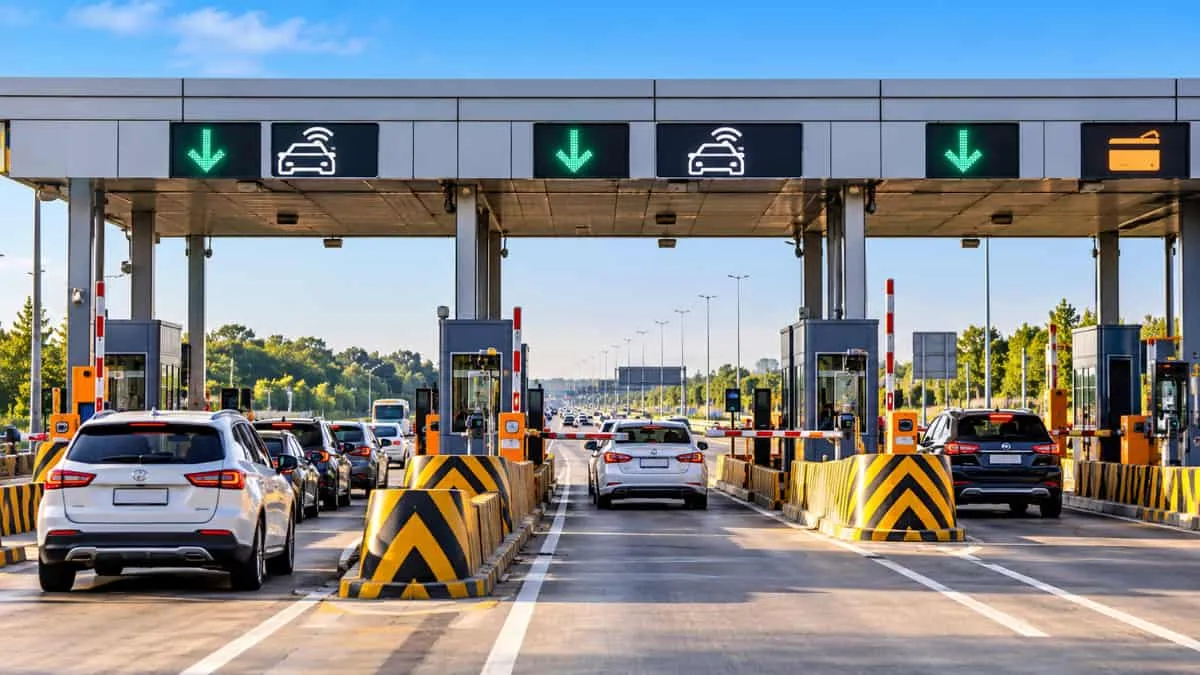
Overview of the New Highway Toll Policy
Daily commuters and residents living adjacent to National Highway toll plazas have received significant relief from daily toll charges. The Ministry of Road Transport and Highways (MoRTH) officially published the National Highways Fee (Determination of Rates and Collection) (Fifth Amendment) Rules, 2026 on October 26, 2026 under notification number G.S.R. 917(E).
Coming into force on November 1, 2026, this reform introduces an annual concessional local pass designed specifically for non-commercial vehicle owners living in the immediate vicinity of a toll plaza. By amending Rule 9 of the 2008 National Highways Fee Rules through the insertion of sub-rule (3A), the government provides private vehicle owners with a cost-effective alternative to monthly passes and routine single-journey tolls.
Key Snapshot: Highlights of the 2026 Amendment
| Parameter | Details |
| Enforcement Date | November 1, 2026 |
| Notification Date & Number | October 26, 2026 |
| Governing Authority | Ministry of Road Transport and Highways (MoRTH) |
| Statutory Framework | National Highways Fee (Determination of Rates and Collection) Rules, 2008 |
| Permissible Distance Radius | Within 20 km of the designated toll plaza |
| Applicable Vehicle Category | Non-commercial / Personal use vehicles only |
| Annual Fee (Non-Municipal) | ₹1,500 per year |
| Annual Fee (Municipal / Town) | ₹3,000 per year |
| Mandatory Tech Standard | Functional FASTag mapped to personal registration |
| Rate Revision Cycle | Annually on April 1 |
Fee Structure: ₹1,500 vs. ₹3,000 Tier Breakdown
The notification outlines a dual-slab fee model determined by the geographic and administrative location of the toll plaza:
- Outside Municipal or Local Town Limits (₹1,500 per year): If a toll plaza is located outside the administrative boundary of an urban municipality, nagar palika, or designated local town area, qualifying residents will pay an annual fee of ₹1,500.
- Within Municipal or Local Town Limits (₹3,000 per year): If the toll plaza is positioned inside the limits of an urban local body, municipal corporation, or town area, the concessional fee is set at ₹3,000 per year.
Financial Comparison: Regular commuters relying on existing standard monthly passes (approx. ₹360 per month, totaling roughly ₹4,320 annually) stand to save between ₹1,320 and ₹2,820 per year under this new annual structure.
Note: In accordance with statutory collection protocols, the Central Government retains the provision to revise these base concessional rates annually on April 1.
Strict Eligibility Criteria
Qualifying for the concessional pass requires meeting all of the following parameters collectively:
- 20 km Geofence: The vehicle owner must be a bona fide resident residing within a 20 km physical radius of the respective toll plaza.
- Non-Commercial Vehicle Registration: The concession applies strictly to privately owned vehicles registered for non-commercial, personal transport. Taxis, commercial cabs, transport trucks, or commercial utility vehicles are excluded.
- Active FASTag Compliance: The vehicle must be fitted with a valid, functional FASTag registered against the owner’s personal vehicle details. The concession will be handled digitally through the FASTag interface.
- Single Plaza Validity: The pass is non-transferable across different toll barriers. It is valid exclusively at the single, designated plaza for which the application is approved.
Major Exclusions: Where the Pass Cannot Be Used
The amendment specifies situations where the local pass cannot be issued or utilized, even if the vehicle owner lives within the 20 km threshold:
- Access to Alternative or Service Roads: If a usable service road, bypass, or secondary alternative route exists for local transit around the toll plaza, vehicle owners cannot claim this concession. The absence of an alternative route is an express condition for obtaining the pass.
- Closed User Fee Collection Systems: The pass does not apply to access-controlled expressways or highways operating on closed toll systems, where tolls are calculated dynamically based on exact entry and exit ramp distances.
- Plazas Outside the Registered Circle: Motorists cannot use a local pass issued for Plaza “A” to pass through Plaza “B”, even if Plaza “B” falls along the same National Highway stretch.
Monthly Pass vs. Annual Pass: The Commuter’s Choice
Vehicle owners are not forced into a single billing structure. The new rules preserve consumer flexibility by allowing eligible individuals to select either:
- The traditional monthly local pass under sub-rule (3); or
- The new concessional annual pass under sub-rule (3A).
This setup benefits both seasonal drivers who only need regional passage for a few months and daily commuters who prefer a one-time yearly payment.
Required Documentation for Verification
While the gazette establishes the statutory criteria, toll concession verification requires proof of ownership and location. Commuters should maintain ready access to:
- Proof of Residence: Official identification displaying residential address within the 20 km radius (e.g., Aadhaar card, Voter ID, or utility bill).
- Vehicle Registration Certificate (RC): Verification confirming the vehicle is registered for non-commercial, private use in the applicant’s name.
- FASTag Linkage Details: Confirmation that the active FASTag is linked to the vehicle’s registration number and KYC requirements.