

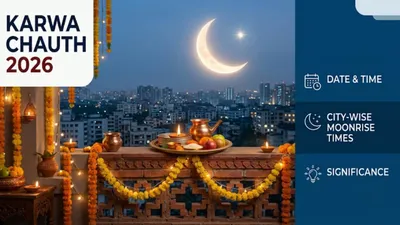
Karwa Chauth 2026: Date, Auspicious Timings, Moonrise, and Spiritual Significance
Karwa Chauth stands as one of the most revered and heartfelt traditions observed across India. Marked by deep devotion, spiritual discipline, and mutual commitment, married women observe a strict nirjala (waterless) fast from sunrise until the moon rises, praying for the longevity, health, and prosperity of their spouses.
In 2026, Karwa Chauth will be celebrated on Thursday, October 29, 2026 across India.
Karwa Chauth 2026: Key Timings and Panchang Details
The festival falls on the fourth day (Chaturthi) of the dark fortnight (Krishna Paksha) in the lunar month of Kartik. For observances across India, the entire schedule aligns with the following auspicious windows:
| Event / Ritual | Date and Auspicious Timing (IST) |
| Festival Date | Thursday, October 29, 2026 |
| Hindu Lunar Day | Kartik Krishna Chaturthi (Vikram Samvat 2083) |
| Chaturthi Tithi Begins | 01:06 AM on October 29, 2026 |
| Chaturthi Tithi Ends | 10:09 PM on October 29, 2026 |
| Sargi (Pre-Dawn Meal) | Before Sunrise (around 04:30 AM – 05:30 AM) |
| Fasting Duration (Upvasa) | 06:31 AM to 08:17 PM (approx. 13 hrs 46 mins) |
| Karwa Chauth Puja Muhurat | 05:38 PM to 06:56 PM (Duration: 1 hr 18 mins) |
| Delhi Moonrise Time | Around 08:17 PM |
City-Wise Moonrise Timings (October 29, 2026)
Because the Earth rotates from west to east, cities located in eastern India will observe the moon rise earlier, while western regions experience moonrise later. Devotees should track their regional moonrise times:
| City | Expected Moonrise Time (IST) |
| Kolkata | 07:47 PM |
| Patna | 07:52 PM |
| Lucknow | 08:06 PM |
| Chandigarh | 08:12 PM |
| Noida / NCR | 08:16 PM |
| New Delhi | 08:17 PM |
| Jaipur | 08:28 PM |
| Hyderabad | 08:41 PM |
| Chennai | 08:44 PM |
| Ahmedabad | 08:52 PM |
| Bengaluru | 08:55 PM |
| Mumbai | 09:00 PM |
(Note: Actual visual sightings can vary by a few minutes depending on local elevation and cloud cover.)
Rituals and Sacred Traditions
Karwa Chauth is distinguished by its time-honored, multi-stage rituals that span from dawn to nightfall:
1. The Pre-Dawn Sargi
Before dawn breaks, fasting women consume Sargi, a nutritious meal prepared or blessed by their mother-in-law. The plate traditionally consists of dry fruits, fresh seasonal fruits, sweets, feni, and water to provide sustained energy and hydration throughout the day.
2. The Nirjala Vrat
Once sunrise occurs (around 06:31 AM in North India), the strict nirjala fast commences. No food or water is consumed throughout the daylight hours. Women spend the afternoon adorning their hands with intricate mehndi (henna) patterns, wearing bridal colors like crimson or vermilion, and curating their puja thali.
3. Evening Puja and Vrat Katha
During the auspicious evening muhurat (05:38 PM to 06:56 PM), women gather in circles for the community puja. A sacred altar is arranged featuring an image or idol of Goddess Parvati (Gauri Mata), Lord Shiva, and Lord Ganesha.
- The traditional Karwa Chauth Vrat Katha (the legend of Queen Veeravati and her unwavering devotion) is narrated.
- The women rotate their decorated thalis in a rhythmic circular pattern known as the Thali Phirna ritual while singing devotional folk hymns.
- Offerings of wheat, mathri, and earthen pots (karwas) filled with water or sweets are blessed and later given to mother-in-laws as Baya.
4. Chandra Arghya and Breaking the Fast
When the moon ascends into the night sky:
- The devotee lights an earthen lamp (diya) placed on a sieve (chhalni).
- Looking at the moon through the sieve, she offers water (Arghya) and flowers to Chandra Deva, seeking divine blessings for her marital life.
- She then turns the sieve to look directly at her husband’s face through the same net.
- The husband breaks her fast by offering her the first sip of water from the sacred Karwa and a morsel of sweet or food.
Cultural and Spiritual Significance
The word Karwa refers to the small clay pot that symbolizes simplicity, containment of life-giving water, and prosperity, while Chauth denotes the fourth day of the lunar cycle.
Beyond physical austerity, Karwa Chauth carries layers of deep meaning:
- Spiritual Discipline: The fast is an exercise in mental resilience, restraint, and selfless dedication.
- Marital Harmony and Reciprocity: While historically practiced exclusively by women, modern couples often observe the fast together, turning the occasion into a mutual celebration of partnership, respect, and lifelong support.
- Community and Intergenerational Bonds: From the gifting of the Sargi to the collective chanting of hymns during the twilight puja, the festival reinforces family relationships across generations.