

Karnataka MLC Election Results 2026: Counting Underway for 4 Crucial Council Seats
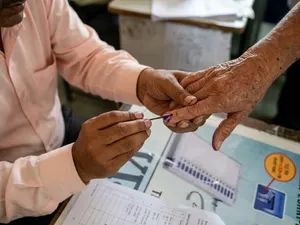
The electoral battleground in Karnataka shifted to the counting centers as officials commenced the counting of ballots for four key seats in the Karnataka Legislative Council. Polling for these seats concluded on October 23, recording an impressive participation rate across both graduates’ and teachers’ segments.
A total of 43 candidates are vying for victory across four prestigious constituencies: South-East Graduates’, West Graduates’, North-East Teachers’, and Bengaluru Teachers’. The current election serves as a high-stakes litmus test between the ruling Congress party and the joint National Democratic Alliance (NDA) comprising the Bharatiya Janata Party (BJP) and Janata Dal (Secular).
Key Highlights of Karnataka MLC Elections 2026
- Polling Date: October 23, 2026
- Counting of Votes: Commenced on October 27, 2026 (from 8:00 AM IST)
- Total Constituencies Contested: 4 seats (2 Graduates and 2 Teachers)
- Total Candidates in Fray: 43 contenders
- Primary Contest: Indian National Congress (INC) vs. BJP–JD(S) Alliance
- Counting Mechanism: Preferential ballot paper counting system with multi-tiered security and CCTV monitoring
Constituency-Wise Candidates and Contests
The seat-sharing formula between the opposition alliance saw the BJP contesting three seats—South-East Graduates’, West Graduates’, and North-East Teachers’—while leaving the Bengaluru Teachers’ constituency to its ally, the JD(S). The Congress has fielded candidates across all four constituencies.
| Constituency | Seat Category | Congress Candidate | BJP / JD(S) Candidate | Status |
|---|---|---|---|---|
| South-East Graduates’ | Graduates | Shashi Hulikunte Mutt | K. M. Suresh (BJP) | Counting underway |
| West Graduates’ | Graduates | Mohan Limbikai | S. V. Sankanur (BJP) | Counting underway |
| North-East Teachers’ | Teachers | Sharanappa Mattur | Shashil G. Namoshi (BJP) | Counting underway |
| Bengaluru Teachers’ | Teachers | Puttanna | A. P. Ranganath (JD(S)) | Counting underway |
Voter Turnout Across Constituencies
Voter mobilization among educators and white-collar professionals remained exceptionally robust on polling day. Teachers’ constituencies recorded particularly high participation rates, crossing the 80% mark.
| Constituency | Registered Segment | Final Polling Percentage |
|---|---|---|
| South-East Graduates’ | Graduates | 73.58% |
| West Graduates’ | Graduates | 75.62% |
| North-East Teachers’ | Teachers | 86.97% |
| Bengaluru Teachers’ | Teachers | 81.98% |
Live Counting Progress and Vote Trends
Counting is conducted under the single transferable vote (STV) system using paper ballots. Initial rounds involve sorting valid ballots, segregating invalid slips, and tallying first-preference votes.
| Constituency | Counting Center Location | Early Trend / Leading Nominee | Status |
|---|---|---|---|
| South-East Graduates’ | Bengaluru / Regional Center | Sorting & 1st preference tally | In Progress |
| West Graduates’ | UAS Dharwad Campus | Strong rooms opened; round 1 sorting | In Progress |
| North-East Teachers’ | Gulbarga University, Kalaburagi | Ballot verification & round 1 counting | In Progress |
| Bengaluru Teachers’ | Bengaluru Central Center | Initial preference rounds underway | In Progress |
Why This Election Matters: Political Stakes
The MLC biennial polls carry significant political weight beyond the upper house tally:
- Litmus Test for the Ruling Congress: These elections serve as a measure of the state government’s standing among educated, salaried, and professional voters.
- BJP–JD(S) Synergy: The elections are a direct gauge of grassroots coordination and vote transfer between the BJP and the JD(S) following their alliance.
- Upper House Balance: A strong showing by either bloc directly influences legislative strength, debate momentum, and policy clearances in the Karnataka Legislative Council.
When Will Final Winners Be Declared?
Because Council elections employ preferential voting, candidates must secure a specific quota of first-preference votes to win outright. If no candidate attains the required quota in the first count, elimination rounds and second-preference transfers commence, which typically extends the counting process into late evening. Official declarations by the Returning Officers will follow once the winning quota is crossed for each seat.